How to host beautifully without spending the evening hosting
There is a particular kind of evening that belongs to the end of summer. The garden is no longer new. It has settled into itself. Roses are fuller, herbs are generous, late flowers are at their best, and the light begins to soften earlier than it did only a few weeks ago.
You can feel the season turning, but only just.
That is what makes this moment so good for entertaining. The weather still carries summer’s ease, yet the atmosphere is becoming more intimate. Guests arrive in lighter clothes, but a fine knit or soft jacket may appear later in the evening. The house begins to glow before the party is over. Candles become useful again. The air cools enough that standing with a drink in the garden feels effortless rather than oppressive.
For me, this is the perfect moment for a garden party. Not a formal dinner. Not a summer barbecue. Something more fluid. People arrive, move around, find a drink, talk to someone they have not seen in awhile, drift toward the food, sit for ten minutes, stand again and follow the light across the garden.
The evening should feel easy. The difficulty, of course, is that ease usually requires planning.
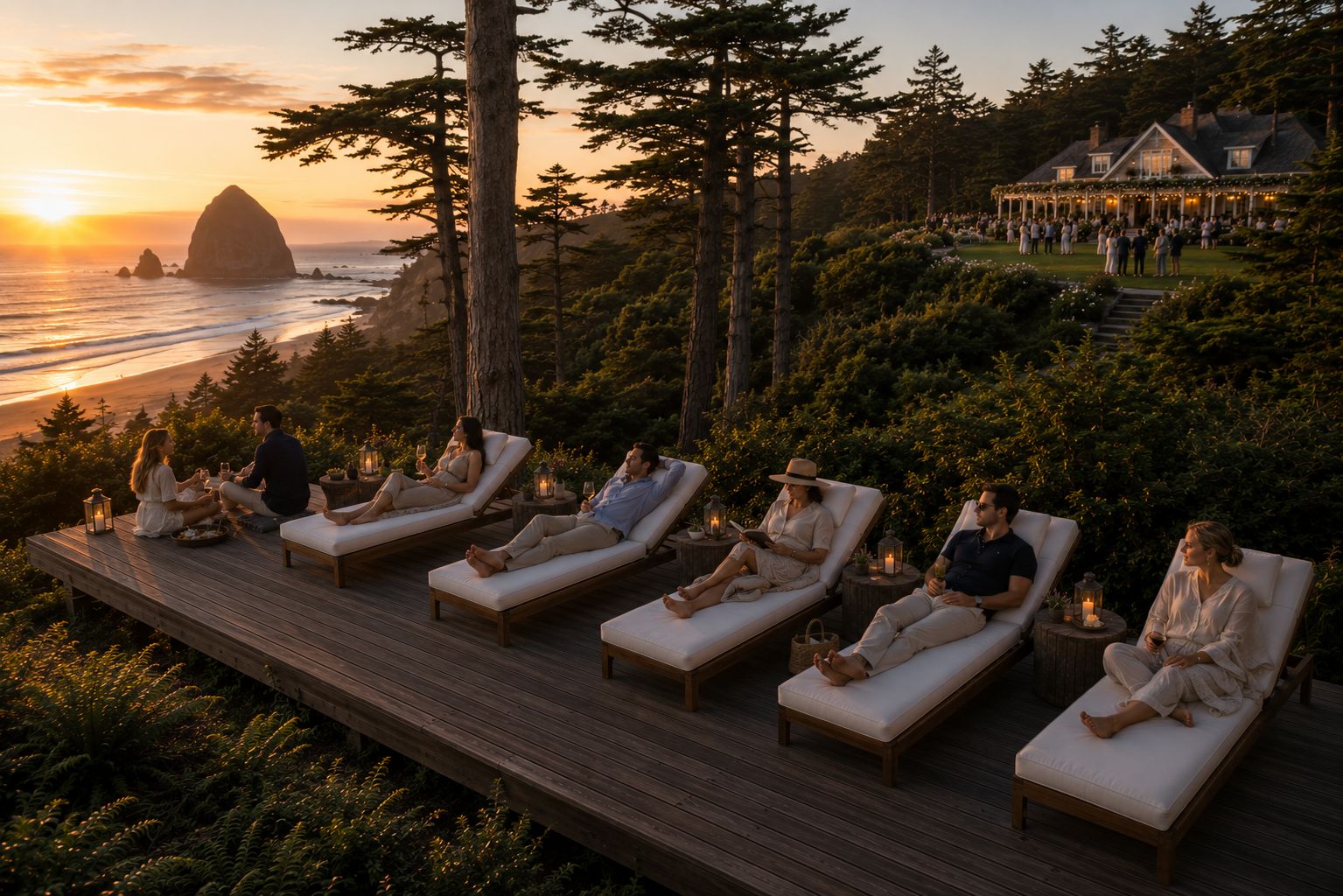
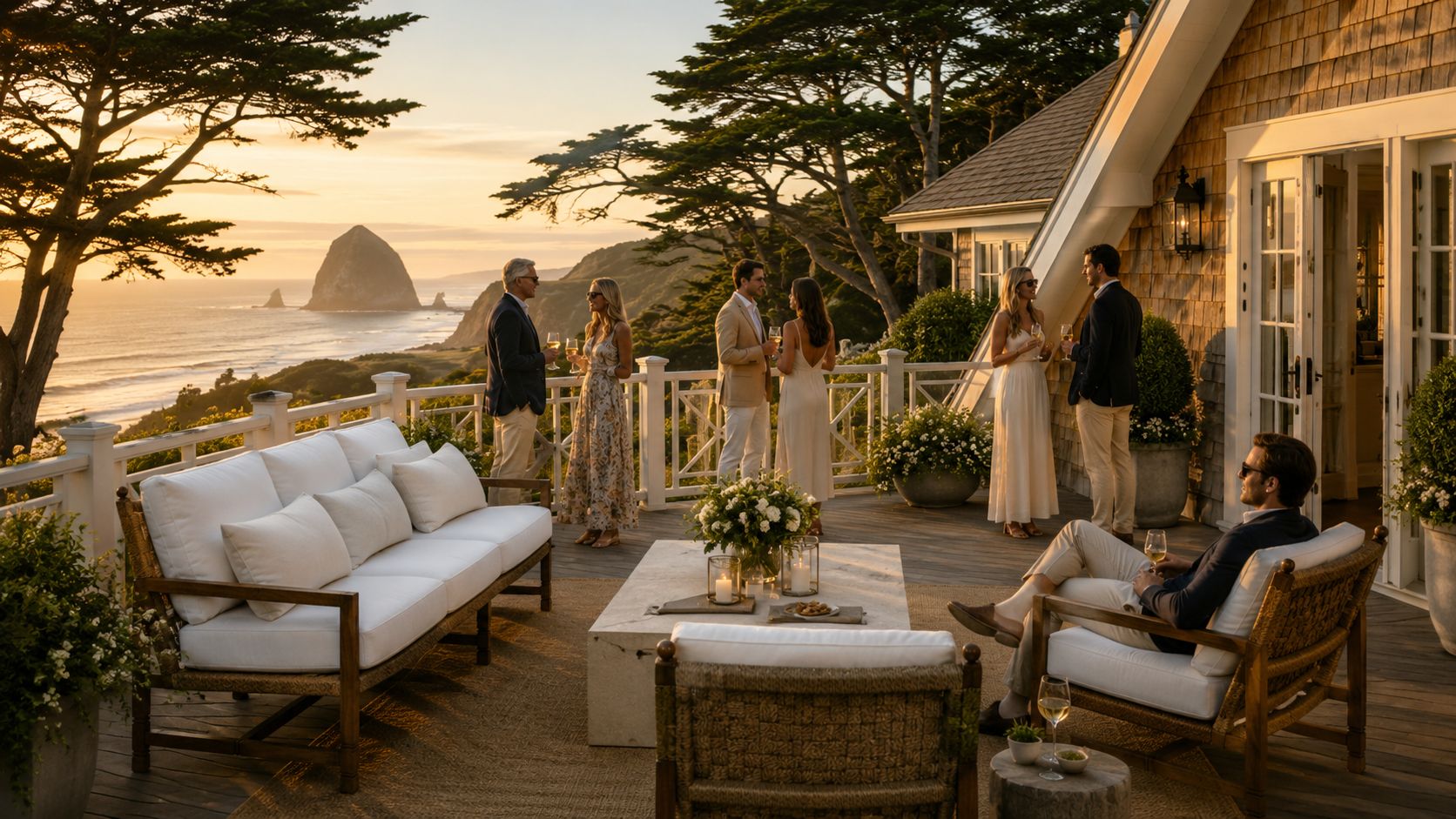
Against the cedar shingles, mature planting and wilder edge of the Oregon coast, furniture with too much polish would feel oddly detached. The setting calls for something warmer and more tactile, pieces refined enough for the house but still connected to the landscape.
Plan the Party Backwards
One of the most useful questions a host can ask is not, “What should I serve?” It is, “Where do I want to be when my guests arrive?”
If the answer is standing in the garden with everyone else, then nearly every other decision should work backward from that. The food should be largely finished. The drinks should be cold. The glasses should be out. The lighting should be ready. Music should already be playing.
The host should not be in the kitchen trying to rescue something that looked brilliant on paper but has become a nuisance in reality. I increasingly think that good entertaining is less about how much you make and more about how intelligently you edit.
A useful rhythm is simple: the day before, do everything that benefits from time. Three hours before, assemble and stage. Thirty minutes before, stop producing.
That last half hour should not be filled with chopping herbs, polishing glasses or trying to remember where the cocktail napkins were put. It should be the moment when you change, walk through the space once, pour yourself something and look forward to your guests arriving.
Food That Knows How to Behave
There are hors d’oeuvres that are delicious and yet completely unsuitable for entertaining: the ones that wilt as soon as they are assembled, become soggy, need to be served at an exact temperature, or leave the host piping, frying and garnishing at precisely the moment the doorbell rings. They may be excellent food. They are simply bad guests.
For a garden party, I want food that can wait. That usually means choosing things that are beautiful at room temperature, can be prepared in batches and still look intentional after several people have helped themselves.
This is also where entertaining is moving in a more interesting direction. The era of covering an entire table with one enormous grazing board feels tired. I would rather see a series of composed food moments, each with its own purpose: something chilled, something warm, something crisp, something salty, something fresh, and enough restraint that guests can actually see what they are choosing.
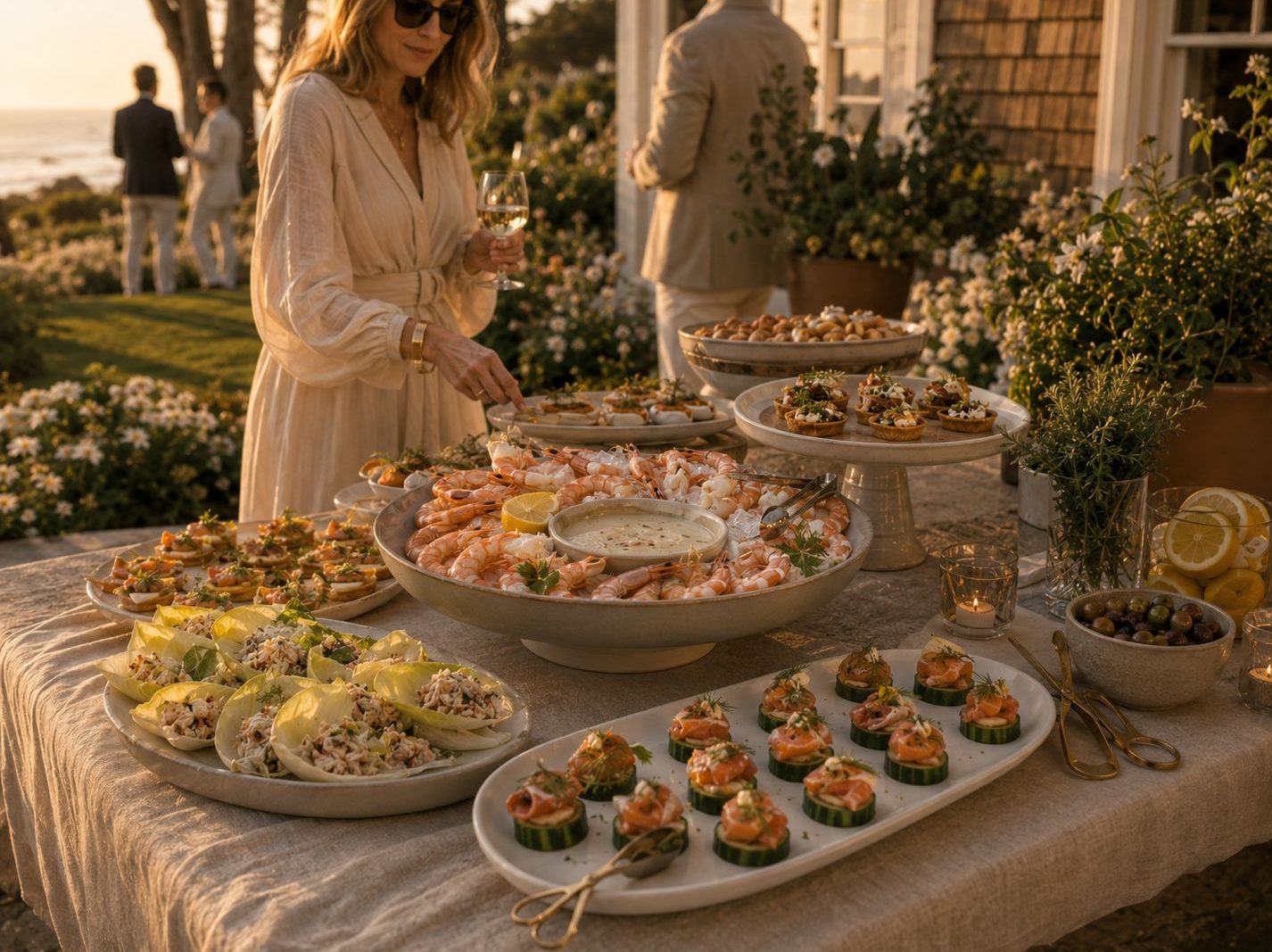
A late-summer Oregon table might include chilled prawns with lemon and a restrained herb aioli, little smoked-trout cucumber rounds, crisp endive leaves filled with crab and citrus, small savory tartlets, warm rosemary nuts, marinated vegetables and one very good bread.
None of this needs to become complicated. The point is not culinary theatre. The point is generosity without chaos.
A large platter of cold seafood can be staged beautifully over ice and left alone. A tray of cucumber and smoked trout bites can be completed ahead. Little tartlets can be warmed in one batch. Endive and crab can be assembled early enough to remove the host from the last-minute rush. The best food at a party is food that allows the evening to keep moving.
Make the Drinks Station Part of the Room
If the food is meant to keep the host out of the kitchen, the drinks should do the same. I have never understood why someone would invite people over and then spend most of the evening making them drinks one at a time. A good bar should create possibility, not employment.
For this kind of late-summer gathering, I would create one proper drinks station and treat it almost like a piece of furniture. It should look good before anyone has touched it, and it should still look good an hour later.
That means the materials matter: beautiful cut glass, heavy tumblers, a few elegant coupes, polished cocktail shakers, brass or brushed-metal pouring jugs, soft worn linen rather than starched white cloth, a large brass ice cooler filled with bottles so cold they are beginning to mist, good metal tongs, and small bowls of citrus peel or herbs. Nothing excessive. Everything intentional.
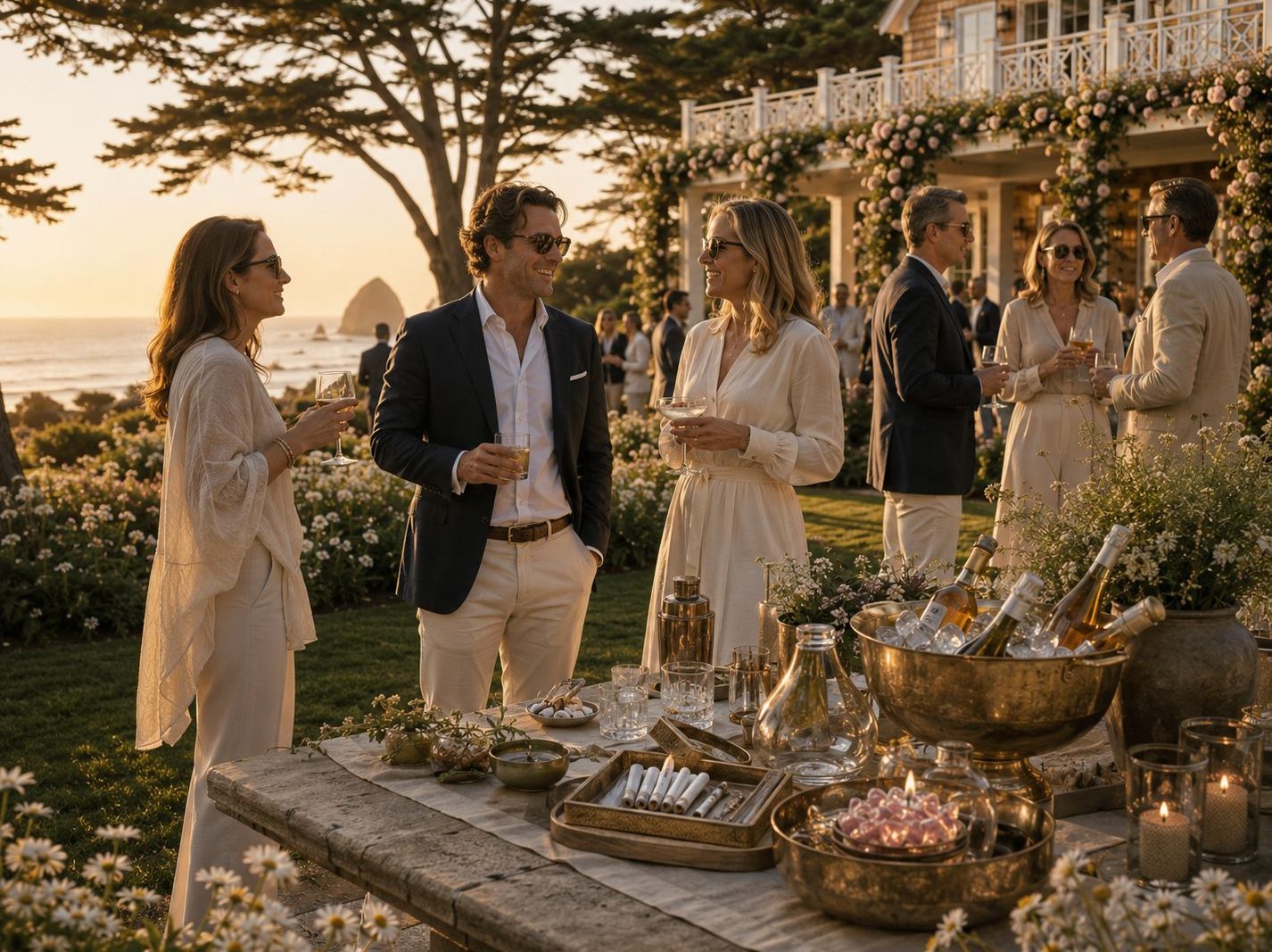
I would offer fewer drinks than most people expect: one sparkling option, one white wine, one red if the evening is likely to run later, one very good cocktail that can be finished in seconds, and one non alcoholic drink that has been thought about just as carefully.
A spritz-style cocktail using a regional ingredient, perhaps pear, blackberry or a local botanical, would feel appropriate here. The base can be prepared in advance. When a guest wants one, all that remains is to pour, top and garnish. Three actions. No muddling. No complicated syrups. No host trapped behind a shaker.
The 30-Minute Rule
I think every host should adopt a version of this. Thirty minutes before the first guest arrives, production stops.
By then, the food is ready, the drinks are cold, the glasses are polished, ice is in the cooler, the bathroom has been checked, music is playing, the flowers or branches are where they need to be, and the garden has been walked once. If a candle needs lighting, it can wait until the light begins to fall. There should be no major task left.
The reason is not discipline for its own sake. It is because the host sets the emotional temperature of the evening. If you greet people distracted and apologizing, they feel it. If you greet them calm, pleased to see them and already part of the party, they feel that too. A relaxed host gives everyone else permission to relax.
Let the Garden Do the Work
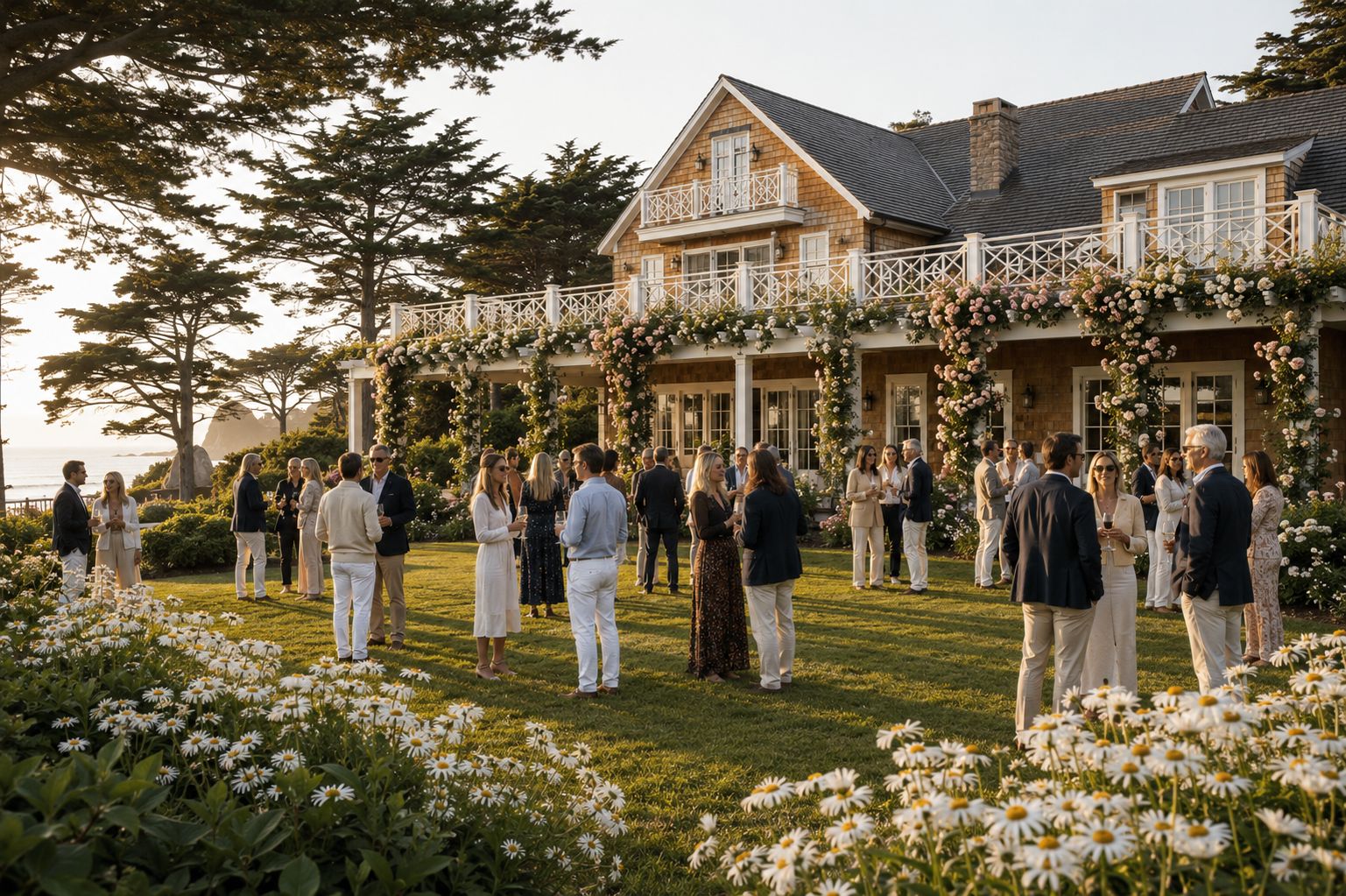
A garden party should feel different from a dinner that has simply been moved outdoors. People need room to circulate, but that does not mean filling a lawn with furniture. In fact, I would do less.
Create several places where people can stop naturally: a pair of lounge chairs beneath a tree, a deeper seating group near the veranda, occasional tables wherever somebody is likely to put down a glass, and a quieter corner for two people who have found themselves in a longer conversation.
Keep the drinks station slightly away from the food so the entire party does not form one queue, and use a central food table without allowing it to become a barrier between people.
The furniture should feel equally relaxed. In this Oregon setting, the Vaterra Collection from Seasonal Living feels particularly appropriate. There is something convincing about the combination of teak and woven texture against an established garden, weathered shingles and the ruggedness of the Pacific coast.
It has enough craftsmanship to feel considered, but not so much polish that the furniture becomes detached from the landscape around it. That balance is important.
The best outdoor furniture often has to perform two apparently contradictory roles. It needs to be sophisticated enough to belong with good architecture, while retaining enough warmth and informality to feel completely natural among trees, gardens, stone and weather.
Vaterra has that slightly traveled quality to it. The woven elements introduce texture and a handmade feeling, while the teak gives the pieces weight and familiarity. Rather than imposing a perfectly controlled look on the garden, the furniture seems comfortable participating in it.
That is also where Seasonal Living’s broader Design Continuum becomes useful. Vaterra does not need to occupy every part of the setting. A Vaterra lounge chair might sit beside a ceramic occasional table. A teak element can be paired with deep outdoor upholstery. Another area can introduce a cleaner concrete or aluminum note. The result feels collected rather than coordinated to death.
For a garden party, that looseness is particularly useful because guests experience the space while moving through it, not from one fixed viewpoint.
A Very Oregon Option
Oregon also allows for another distinctly regional idea. For an adults-only gathering in a private setting, a discreet cannabis station can offer an alternative to another cocktail.
The key word is discreet. This should not look like a dispensary, and it should certainly not look like a novelty. If included, I would treat it almost as a small botanical bar: a handsome console, smoked glass or ceramic vessels, a brass tray, restrained accessories, perhaps a few fresh herbs and clearly labeled legal products from a regulated source.
That is all. No neon green. No oversized cannabis leaves. No attempt to turn it into the theme of the party.
The point is choice. Some guests may want wine. Some may prefer a low-alcohol spritz. Some may not drink at all. And in Oregon, some adults may choose cannabis. A thoughtful host can acknowledge that without making it a performance.
Do Not Overdecorate the Season
Late summer already gives you more than enough. The garden is full. The light is warm. Fruit is beautiful. The house is still open.
You do not need to announce that fall is coming with pumpkins, orange flowers and an aggressive amount of rust-colored fabric. Let the season be implied: creamy linen, a little brass, soft olive, pale tobacco, perhaps the first deeper plum or burgundy note in flowers or glassware, and a darker jacket appearing after sunset.
That is enough. The sophistication is in the transition.
When the Light Begins to Change
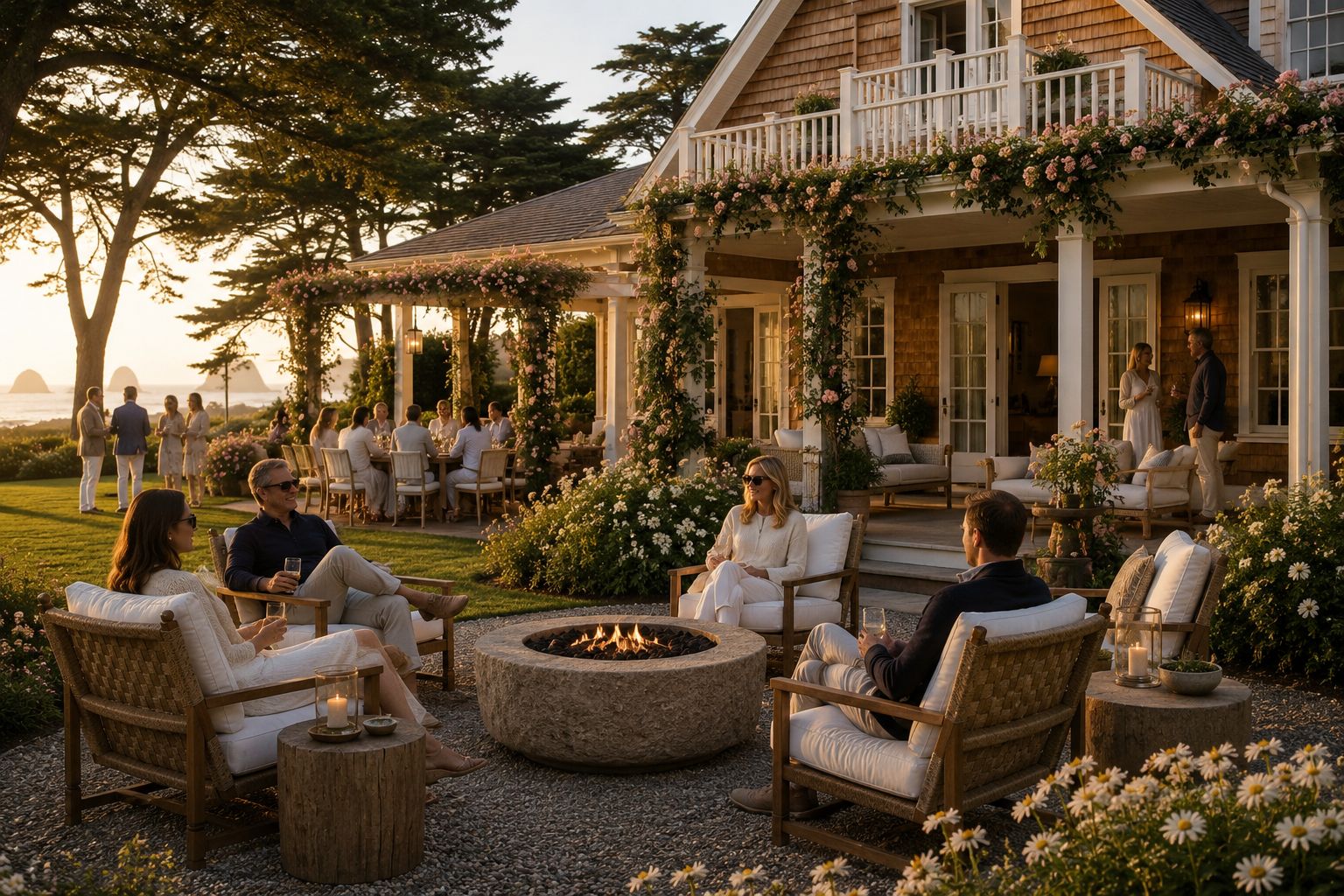
The last part of the evening is usually the most beautiful. The sun drops. The ocean loses its sharpness. Conversation settles. People who have been standing begin to sit. The house glows behind them.
This is when lighting matters. I would avoid flooding the garden with brightness. Use small pools of light: lanterns on low tables, candles near the drinks station, a little warm light beneath the veranda, perhaps discreet string lighting if the architecture supports it, but never so much that the garden begins to resemble an event venue.
The aim is to let people remain outside comfortably while the evening becomes more intimate.
The Point of All This
Entertaining is often made more complicated than it needs to be. We confuse effort with generosity. They are not the same thing.
Generosity is making people feel welcome. It is choosing food they will enjoy. It is making sure there is a comfortable place to sit. It is putting a good drink in their hand. It is introducing two people who ought to know one another. It is noticing when someone needs water. It is making the evening feel considered.
None of that requires the host to be working constantly. In fact, the opposite is usually true. The more intelligently the evening has been prepared, the less visible the preparation becomes.
That, to me, is the real luxury. Not abundance for its own sake. Not endless choice. Not a host performing hospitality from the kitchen. Just a beautiful place, good things to eat and drink, people you want to be with and enough preparation that you are able to enjoy them.
The objective is not to persuade your guests that the evening required no effort. It is simply to make sure the effort happened before they arrived.
When the doorbell rings, put the apron away. Your place is in the garden
Continue the Season
The Last Garden Party of Summer is part of Seasonal Living’s fall editorial series exploring thoughtful outdoor design, food, drink and better ways to gather.
Next, the series moves to a Pennsylvania stone farmhouse to look at how an outdoor room can be designed specifically for fall entertaining, from furniture placement and circulation to lighting, materials and the relationship between the house and the landscape
UNTIL NEXT TIME…
Design is more than aesthetics — it’s a seamless continuum that connects the way we live, work, and gather. Explore new perspectives, timeless craftsmanship, and inspired living with us!
Stay connected to the Seasonal Living Design Continuum Journal. Subscribe today to receive our latest journal entries!