How an Austin evening becomes less about hosting and more about letting the night unfold
Some gatherings begin with a table. Others begin with a sound.
In Austin, on a warm fall evening beside the lake, it might be the first low note of an upright bass moving through the branches of a live oak. A guitar answers it. Somewhere beyond the terrace, glasses meet, a grill lid closes, someone laughs, and the lake catches the last copper light of the day.
Nothing has officially begun, and somehow everything already has. That is the particular pleasure of entertaining outdoors in Texas during fall. The heat has softened. The air changes just enough to make people linger. Doors stay open, jackets remain unnecessary, and the evening no longer feels like something that must be managed around the weather. Instead, it can simply unfold.
The House Is Only the Beginning
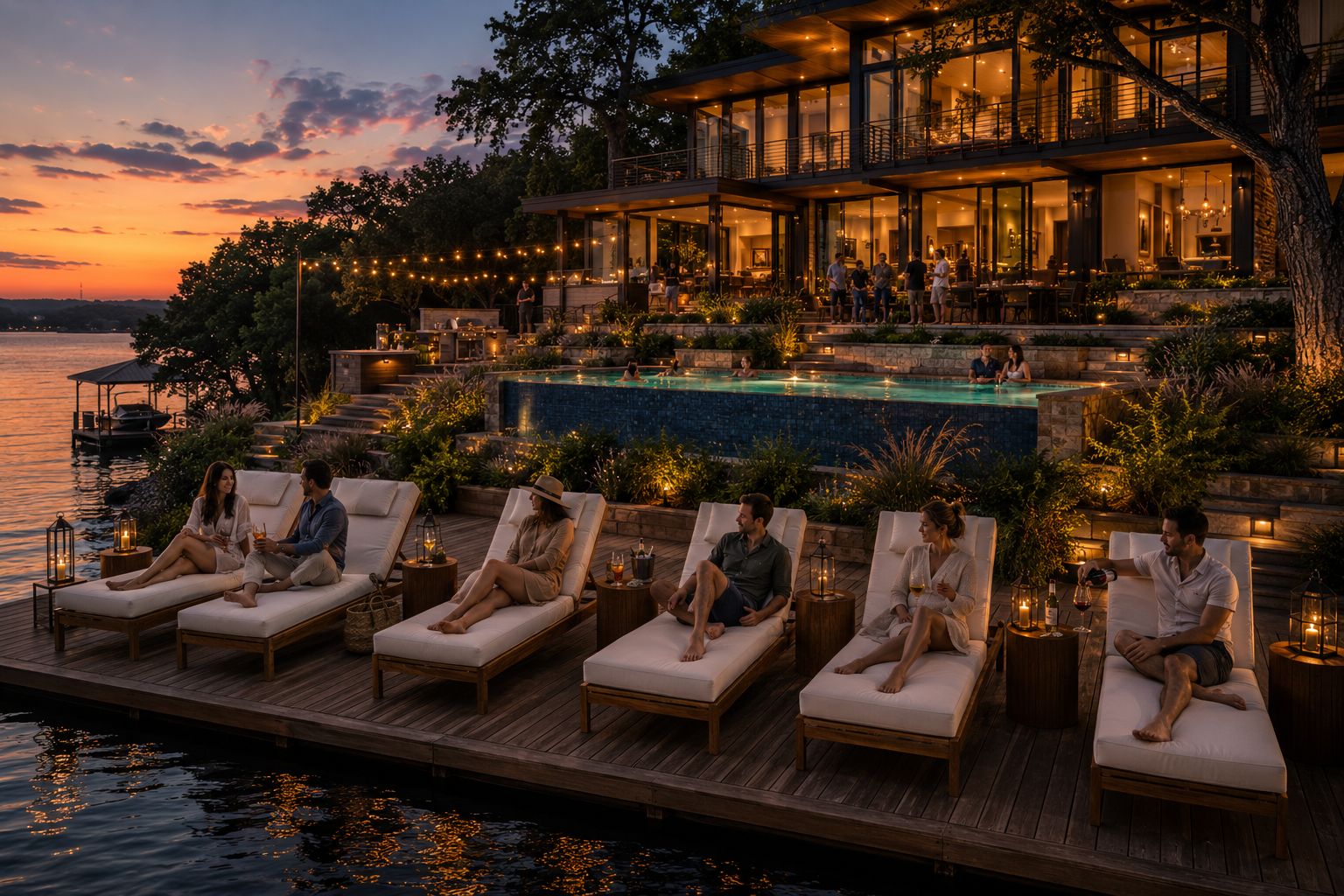
From the water, the house appears almost theatrical at dusk: glass glowing against the hillside, terraces stepping gradually toward the lake, lights catching the stone and landscape as the sky moves from peach into blue.
But the most successful outdoor homes are rarely about the house alone. They are about what happens in the spaces between it and the landscape. Here, the pool terrace, garden, lounge areas and dock do not behave as separate destinations. They become a sequence. Guests can move toward the water, gather under the trees, sit near the fire or drift back toward the house without ever feeling that they have left the party. That sense of movement becomes especially important when the gathering itself is deliberately informal
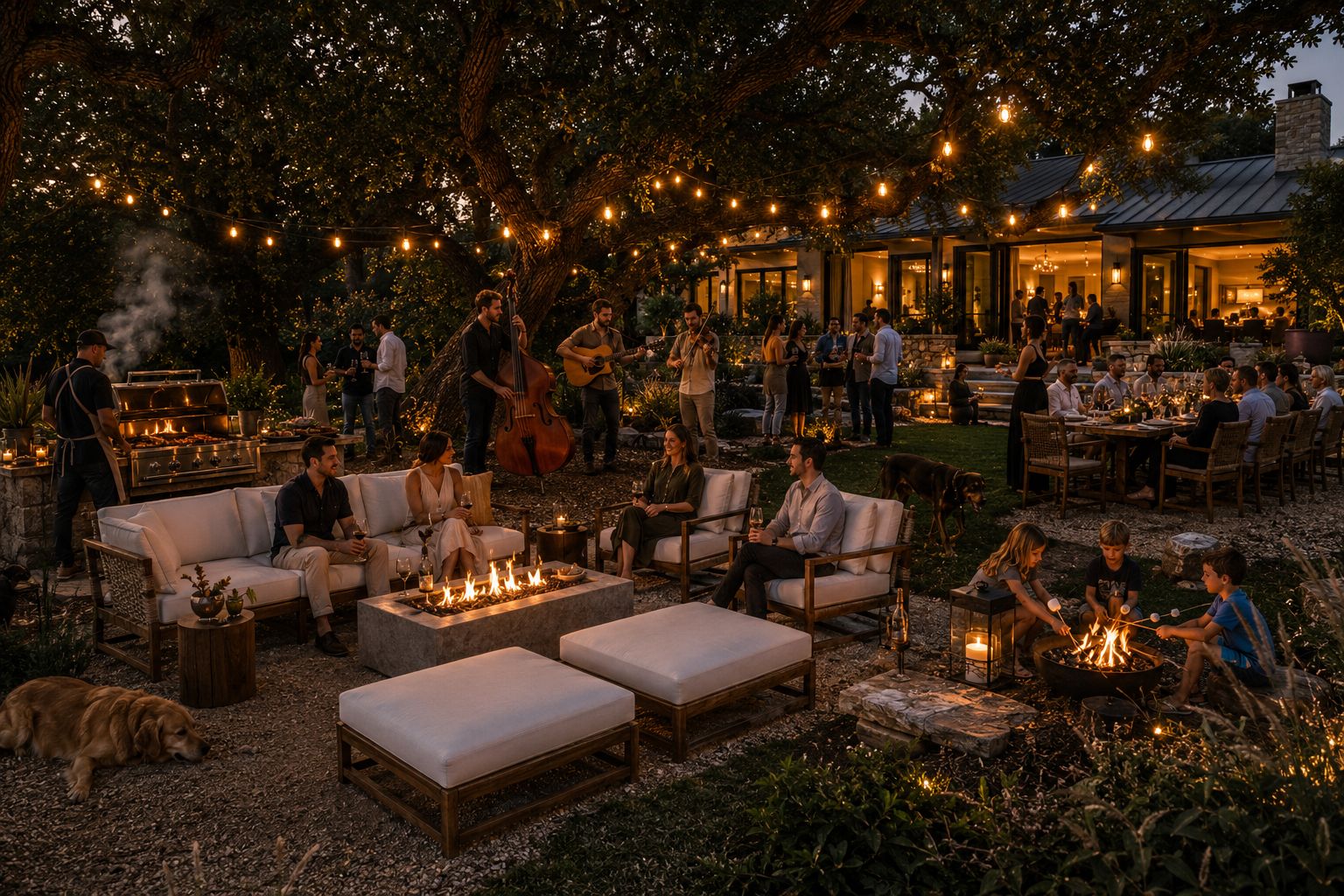
There is no single center of gravity. Music happens under the oak. Food is being finished nearby. Some guests sit at a dining table while others are still talking beside the house. Children hover around a smaller fire. Someone has wandered toward the bar. The best outdoor parties often work exactly this way: they are not arranged around a single table; they are allowed to move.
Furniture That Knows When to Disappear
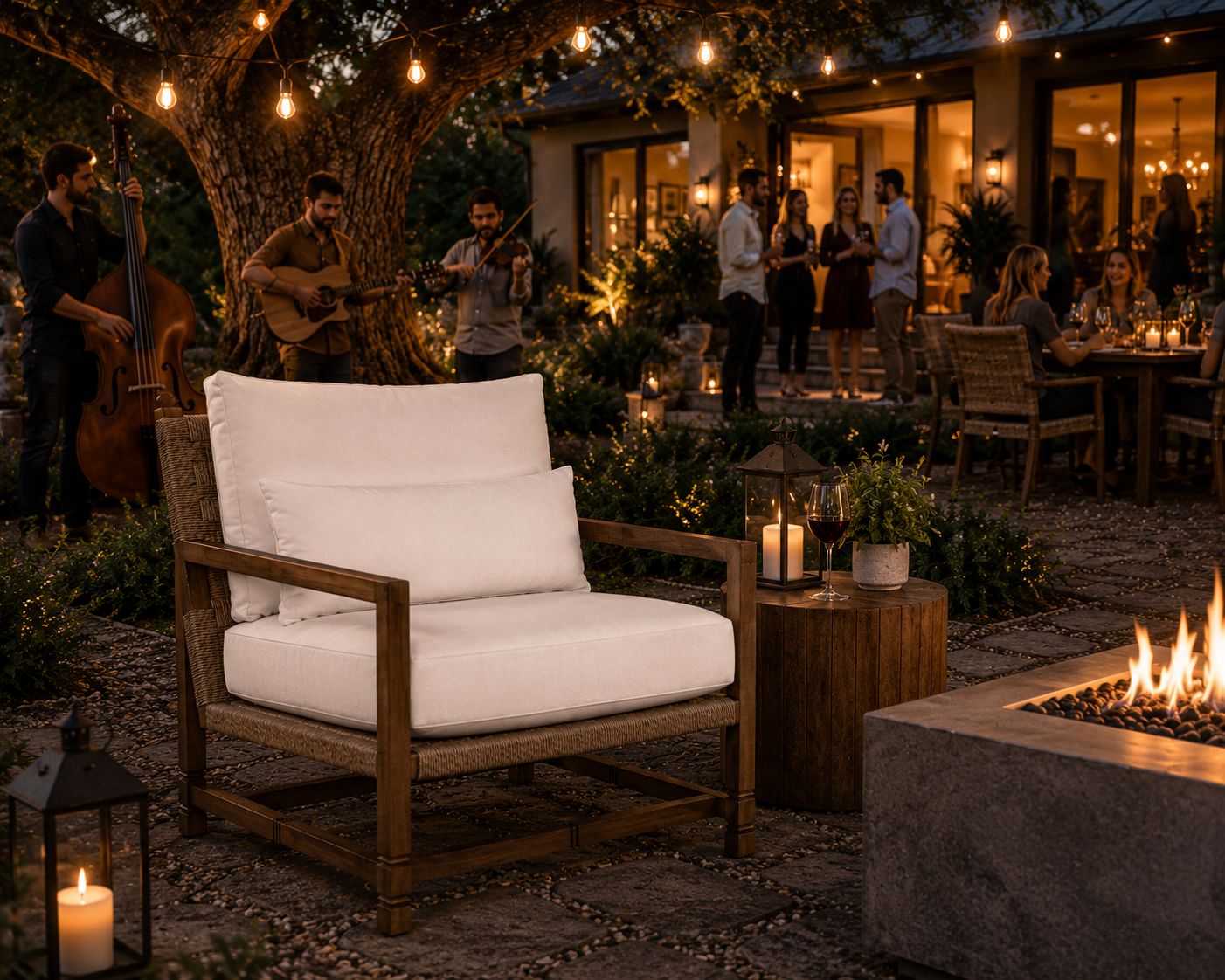
There is an important role for furniture in all this, but it is not to dominate the evening. Seasonal Living’s Vaterra collection works particularly well in this setting because its scale and material language feel grounded in the landscape. Warm pecan-toned teak, darker woven fiber and generous pale cushions sit naturally against Texas limestone, gravel, mature trees and firelight.
The lounge chair is substantial enough to invite someone to stay but open enough visually that the landscape remains present. The same is true of the larger seating pieces. They create places to settle without creating barriers between one part of the gathering and another.
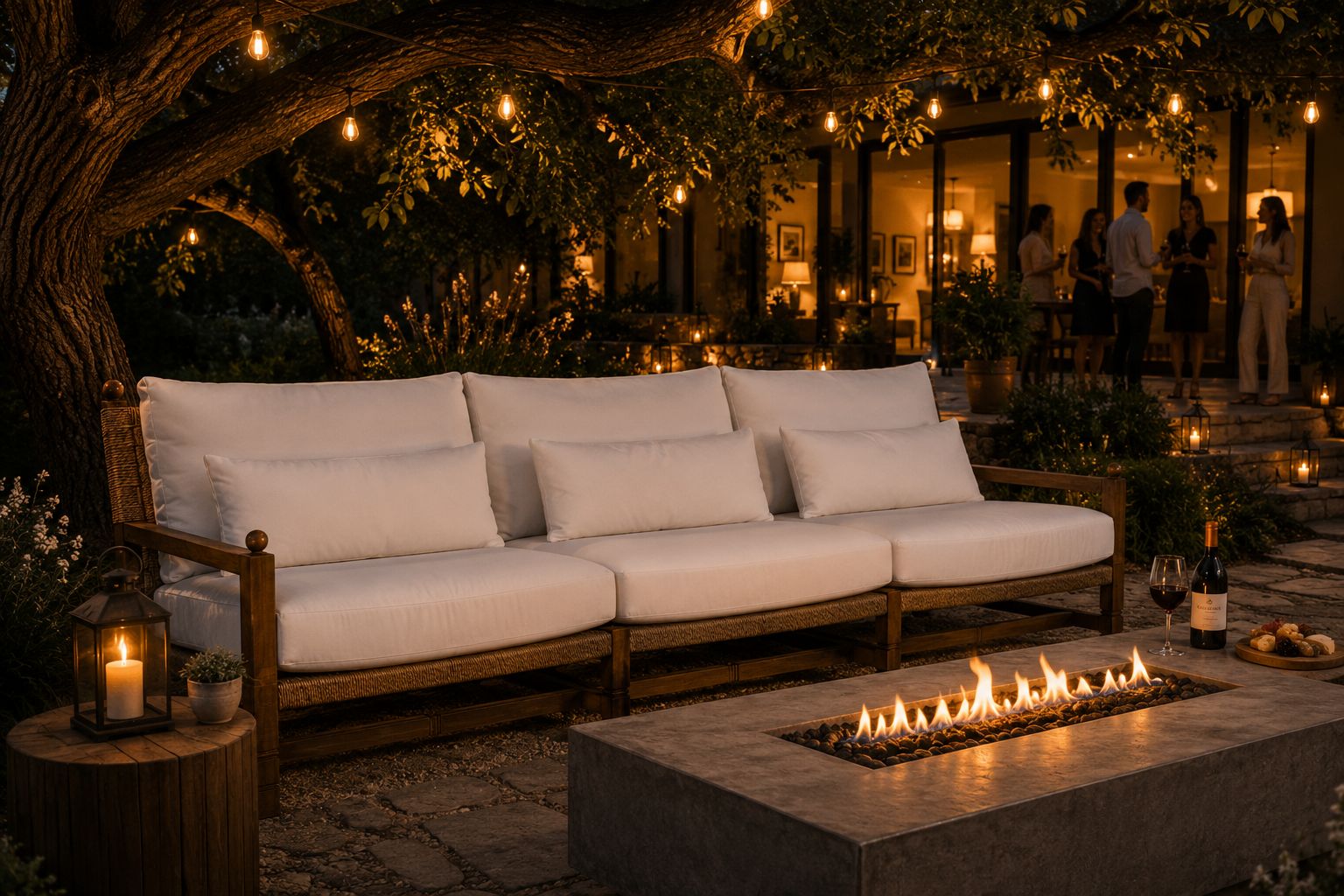
Around the fire, that balance becomes even clearer. Deep cushions soften the architecture of the evening while teak and woven elements keep the seating connected to the more tactile surfaces around it. This is where Seasonal Living’s Design Continuum makes practical sense. The furnishings do not need to match the architecture or mimic the interior. They simply need to belong to the same larger environment through proportion, tone, texture and material. Once guests sit down, the furniture largely disappears from consciousness. That is exactly what good furniture should do.
Let the Oak Become the Ceiling
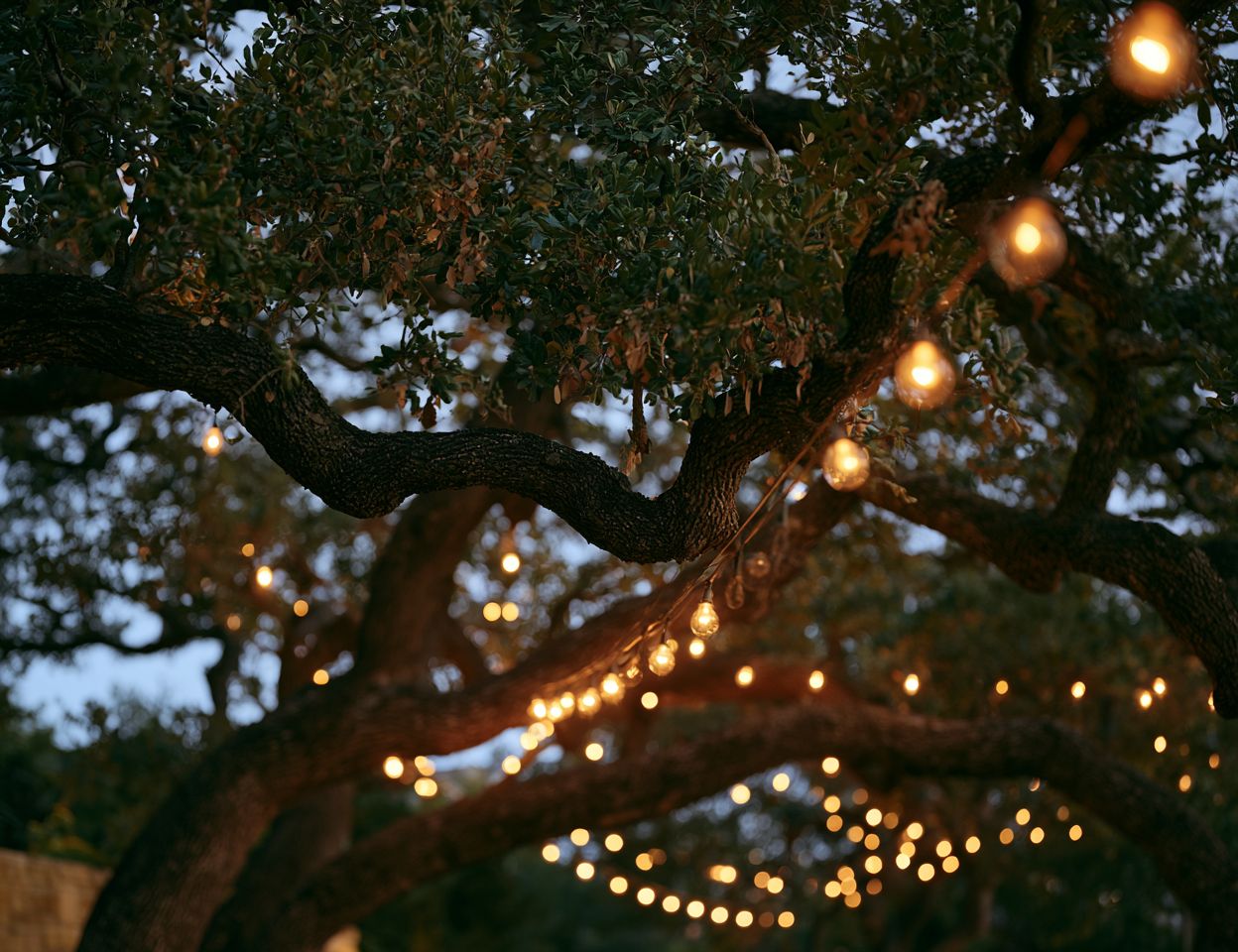
A mature live oak needs very little decoration. Its branches already have structure, shadow and drama. String lights work best when they do not attempt to compete with that architecture but simply reveal it after dark. Hung loosely through the canopy, the bulbs create another layer of space below the branches. Their light is warmer than the remaining sky and softer than architectural lighting, which gives the gathering an intimacy that a floodlit terrace rarely achieves.
There is also something deeply Texan about gathering beneath these trees. Live oaks hold their ground. They spread rather than rise, creating rooms without walls and shade without enclosure. By evening, they become almost domestic.
Music Changes the Shape of a Party
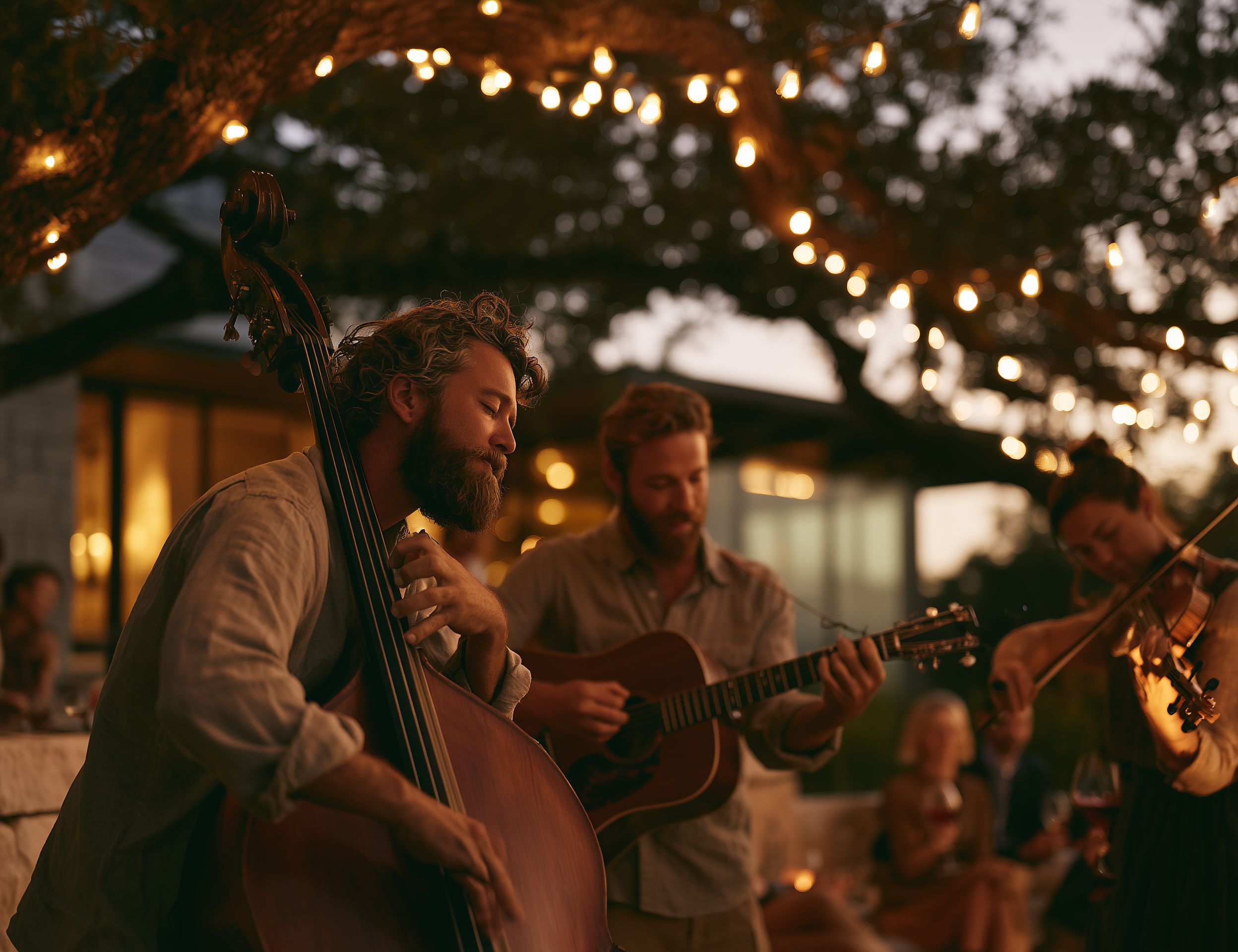
Live music alters a gathering in ways a playlist never quite can. Not because it is louder or more impressive, but because it creates a shared point of attention without demanding one. An acoustic trio of upright bass, guitar and violin is particularly suited to an evening like this. The sound can travel through the garden without overwhelming conversation. Guests can listen closely for a few minutes, then return to talking without feeling they have interrupted a performance.
There is no stage, and there should not be one. The musicians are simply another part of the landscape of the evening, standing beneath the same branches as everyone else. That informality makes the music feel generous rather than programmed.
Keep the House Open
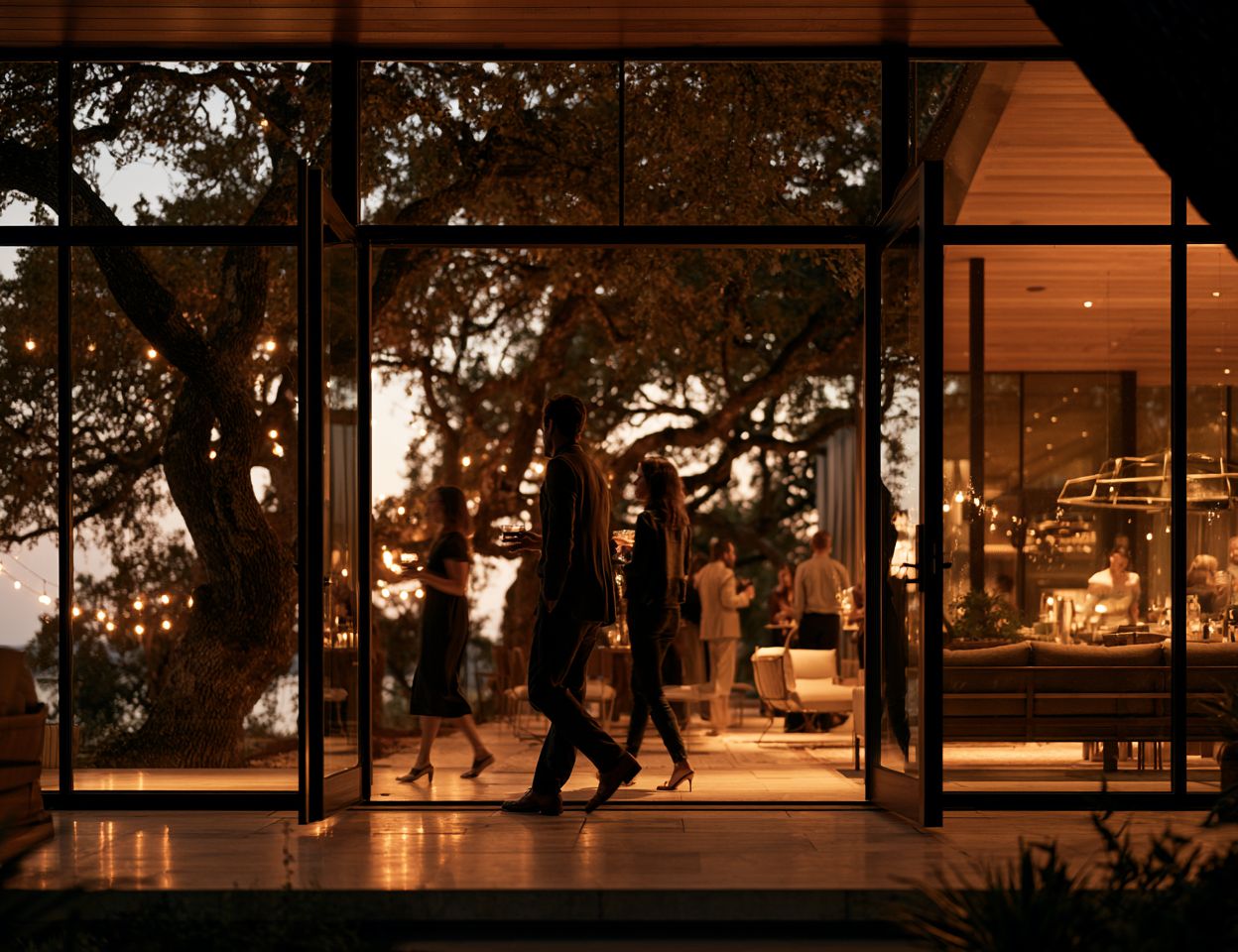
The relationship between inside and outside should remain equally informal. Large glass doors allow guests to move between the two without the psychological moment of ‘going indoors.’ Someone can step inside to find a quieter conversation, collect a sweater, or refill a glass, then return outside almost without noticing the transition.
This is one of the most valuable qualities of contemporary indoor-outdoor design. It is less about creating a dramatic opening in the architecture and more about removing friction from the way people live. At a party, that matters. People naturally seek different levels of sound, light and activity throughout an evening. Good design lets them find those places without breaking the rhythm of the gathering.
The Bar Should Not Need a Bartender
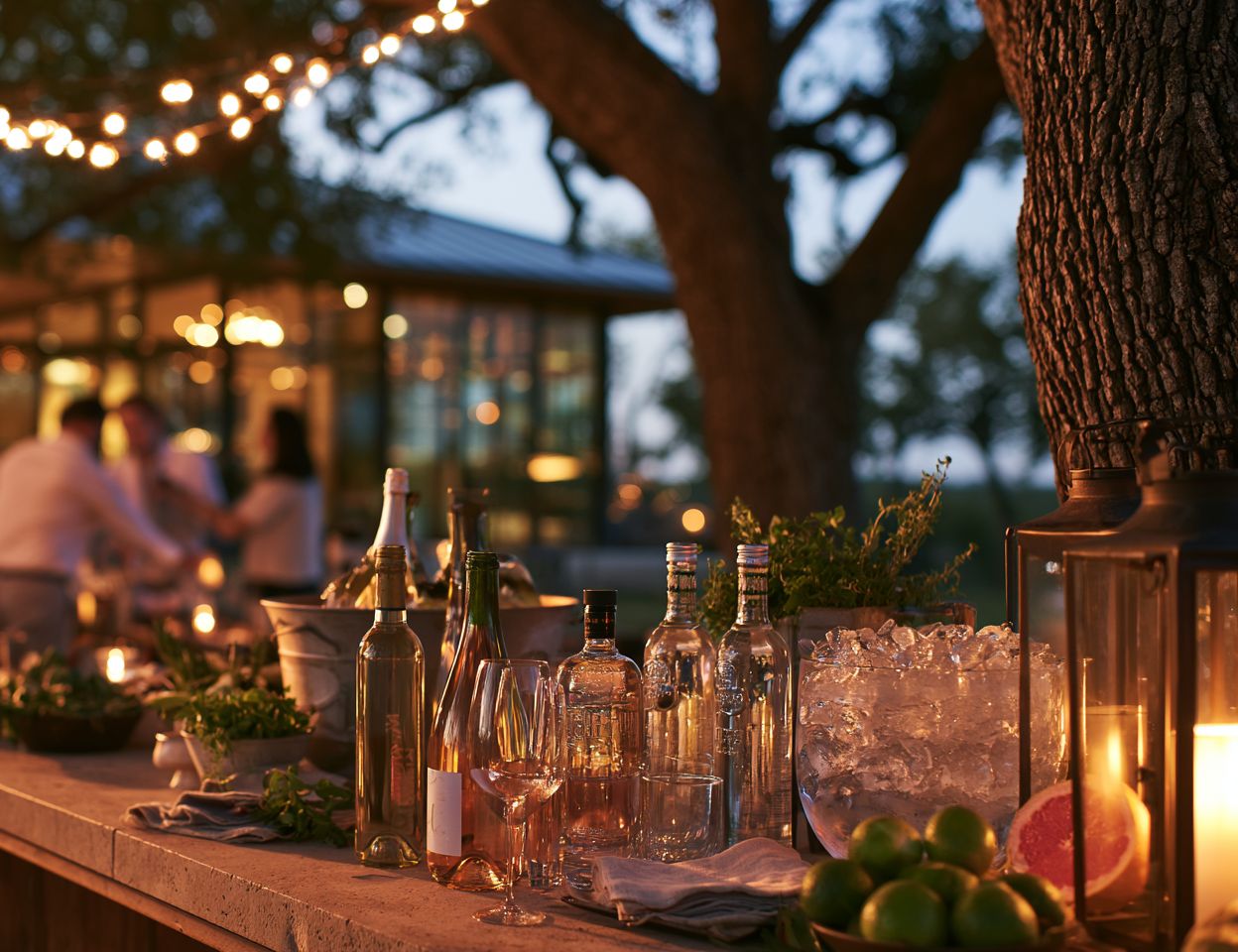
One of the easiest ways to trap a host at their own party is to create a drinks program that requires constant participation. A better approach is to make the bar self-explanatory. Wine should be chilled and accessible. Tequila, sparkling water, citrus and ice can be arranged so guests can make something simple themselves. Proper glassware and good linen make the station feel considered without making it formal.
For Austin, the obvious starting point is Ranch Water: tequila, lime and sparkling mineral water over ice. For this gathering, a Texas Ruby Ranch Water gives it one distinctly local turn, combining blanco tequila, Texas Ruby Red grapefruit juice, fresh lime, a little agave and sparkling mineral water in a pitcher that can be prepared ahead and finished just before guests arrive. A charred grapefruit half-moon and fresh rosemary become the signature garnish, carrying the citrus, smoke and herb notes already moving through the evening. The same drink can be made entirely non-alcoholic with a zero-proof agave spirit, or simply with additional sparkling mineral water, so both versions can be served from the same bar without changing the character of the drink.
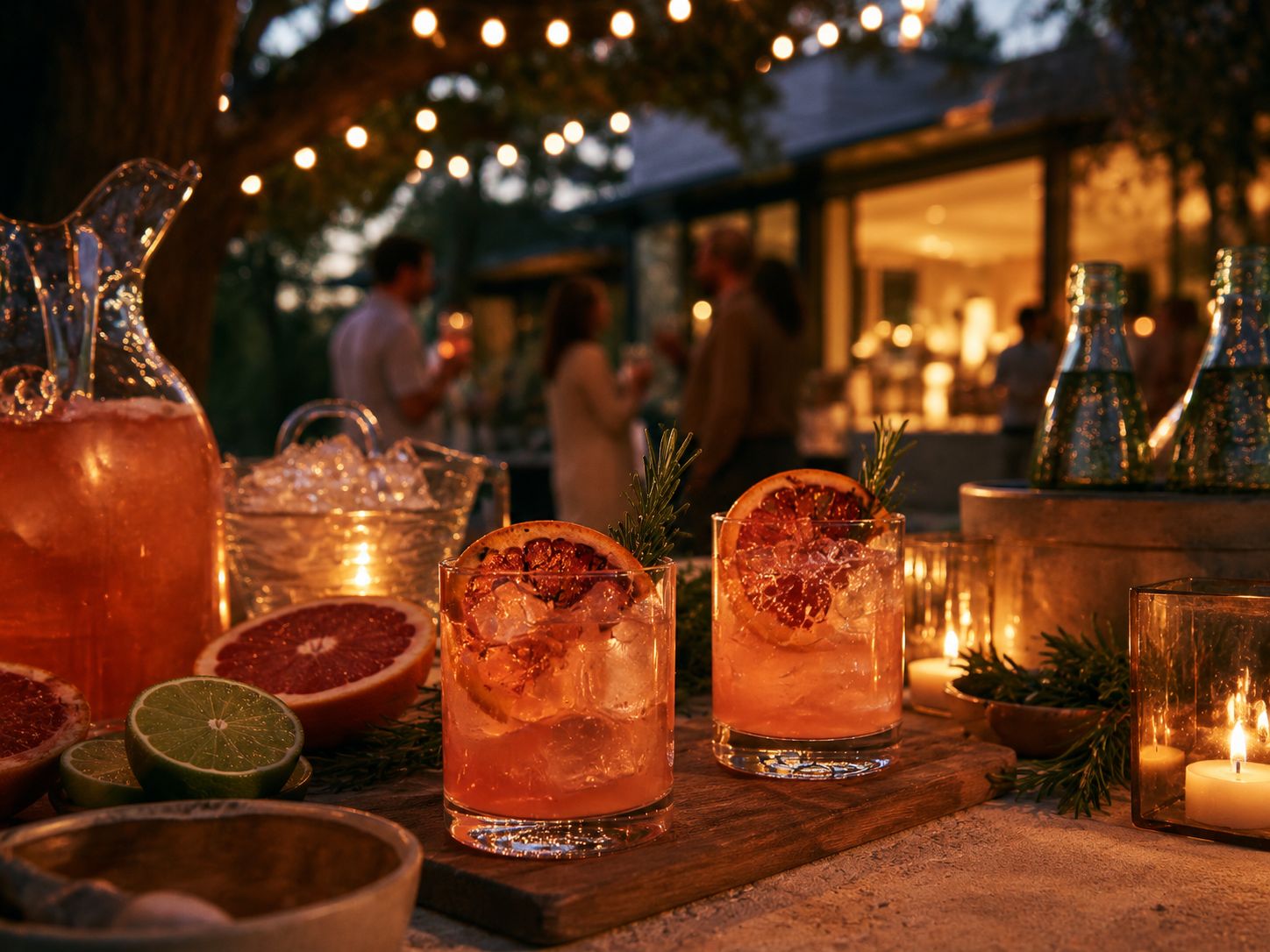
The most successful self-service drinks stations feel less like bars and more like invitations. A guest reaches for a glass, someone else passes the ice, and another person slices a lime. That interaction is part of the evening.
Wine Belongs in Motion
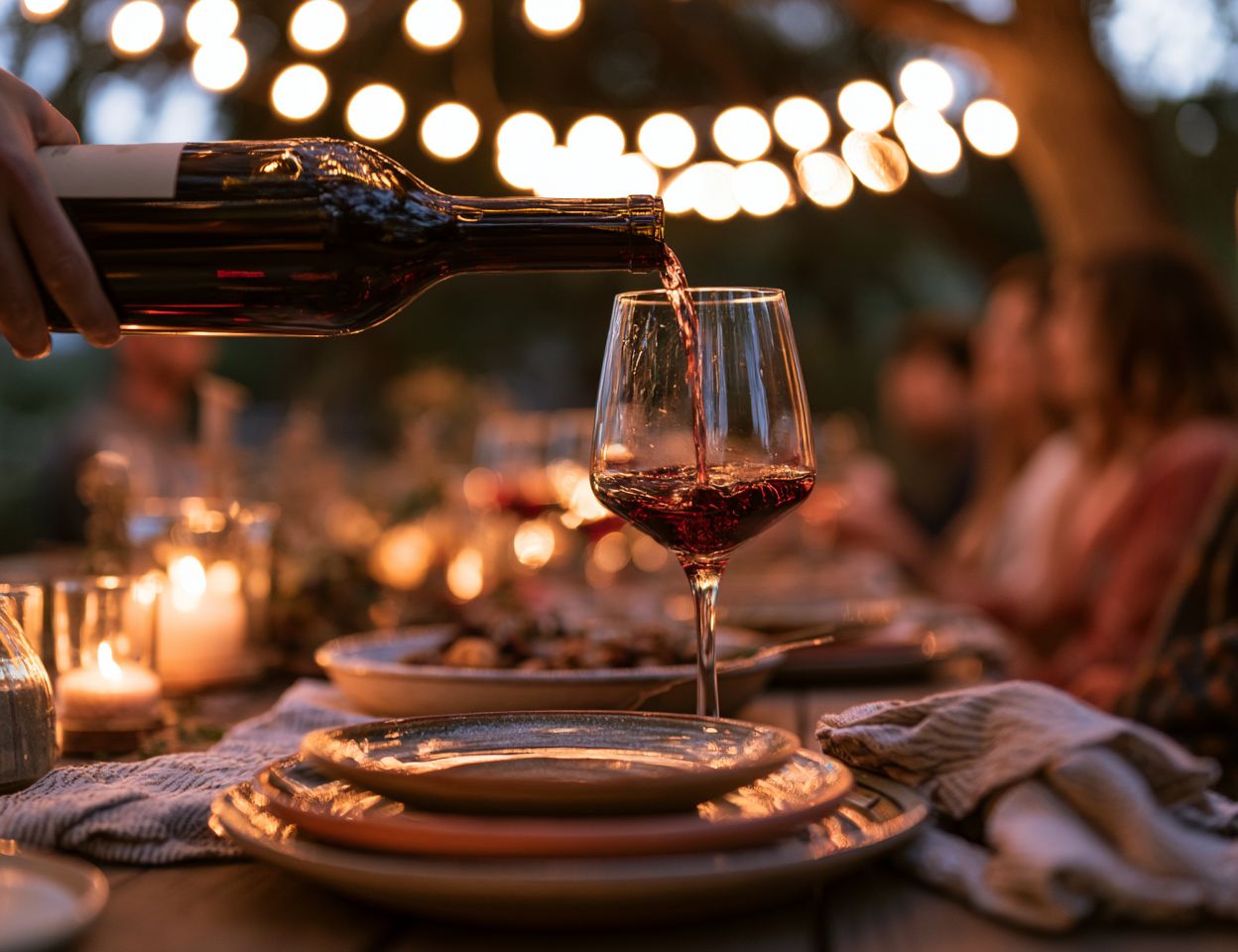
Wine should behave the same way. There is a difference between serving wine and allowing wine to circulate. A bottle passed across a table, a glass topped up mid-conversation or someone returning from the kitchen with another bottle all contribute to the sense that the gathering belongs to everyone. Hospitality becomes less interesting when every gesture has to originate from the host. The more a party can sustain itself, the more everyone—including the person who organized it—gets to participate
Food That Can Wait for You
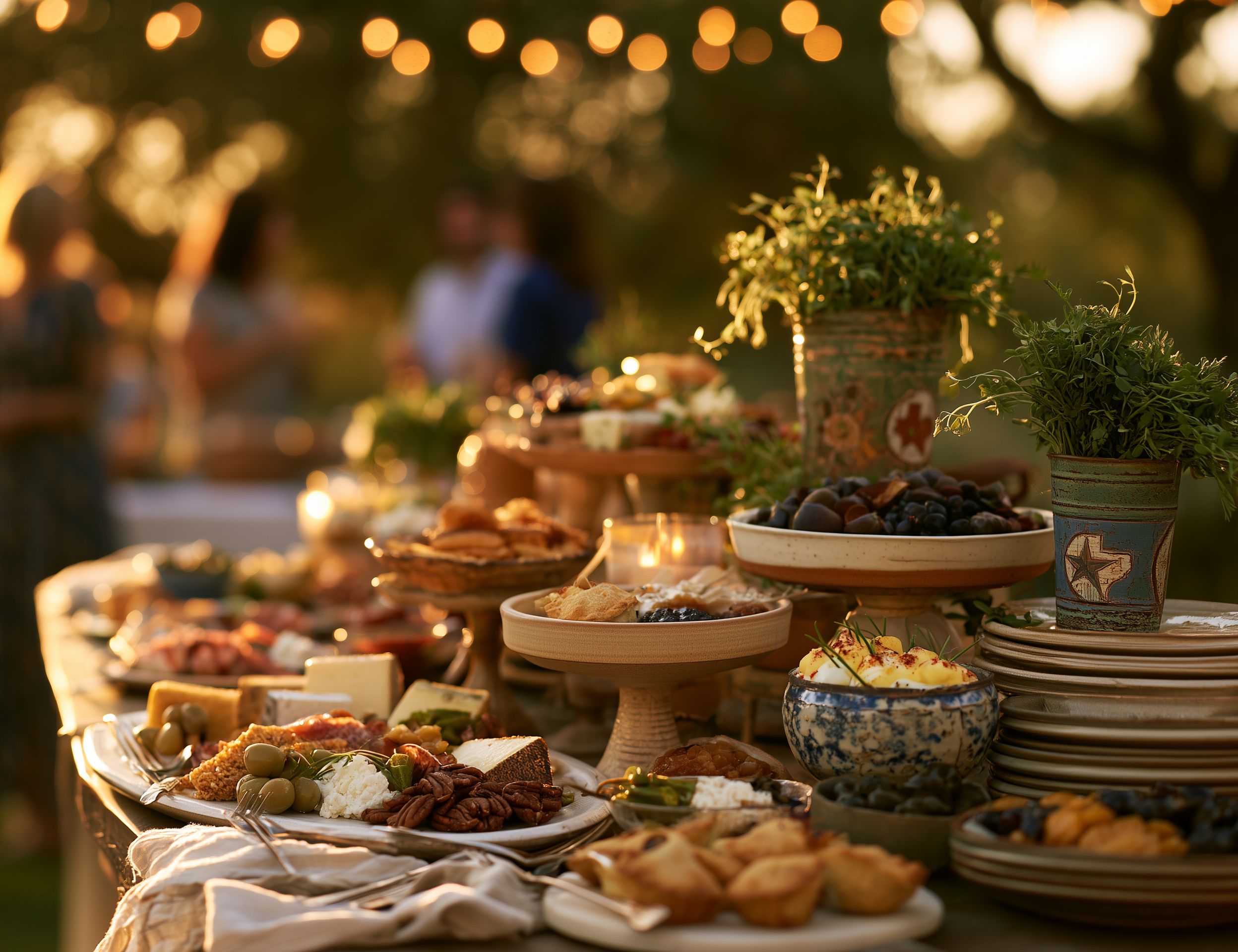
The same principle applies to food. A grazing table is particularly useful for an evening with music and multiple places to gather because it does not demand a starting time. Guests can eat when they are hungry rather than when they are summoned. But it should still feel generous.
Texas cheeses, smoked pecans, olives, pickled vegetables, deviled eggs, small savory pastries, crackers, fruit and a few richer elements create a table people return to repeatedly. Different heights and vessels give the arrangement rhythm, while herbs and ceramic serving pieces keep it tied visually to the garden and landscape around it. The goal is not abundance for its own sake. It is endurance. The food should still be appealing two hours later
Let Someone Else Smoke the Brisket
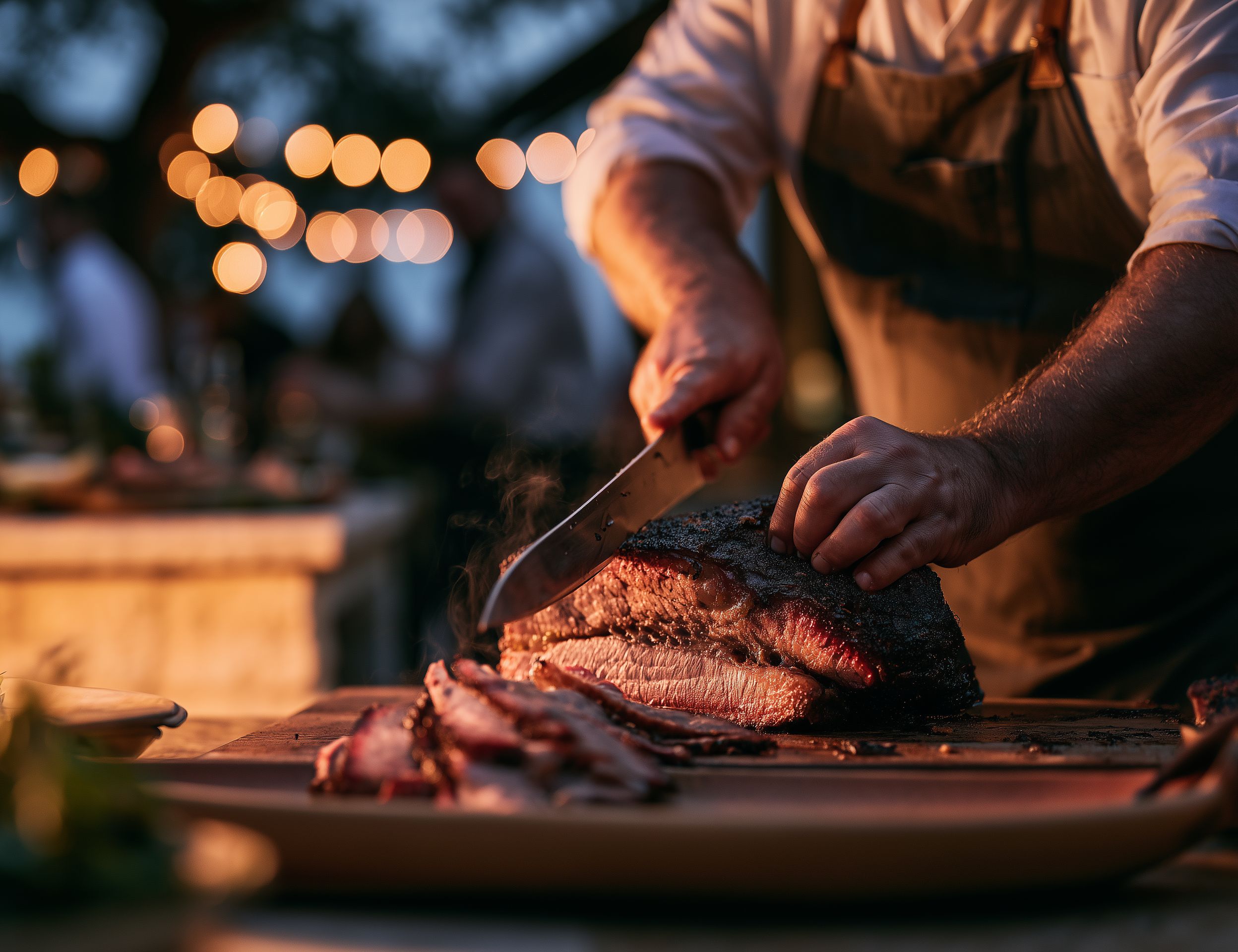
There is a particular madness in inviting twenty people over and deciding that this is also the weekend you should prove you can smoke a brisket for fourteen hours. Texas has solved this problem already. Buy exceptional barbecue from someone whose entire working life is devoted to making it better than you can. Then concentrate on the party.
That might mean collecting a whole smoked brisket shortly before guests arrive and slicing it yourself as the evening progresses. You still get the theatre of the knife, the steam, the blackened bark and the unmistakable smell of smoke without spending the previous night monitoring a fire.
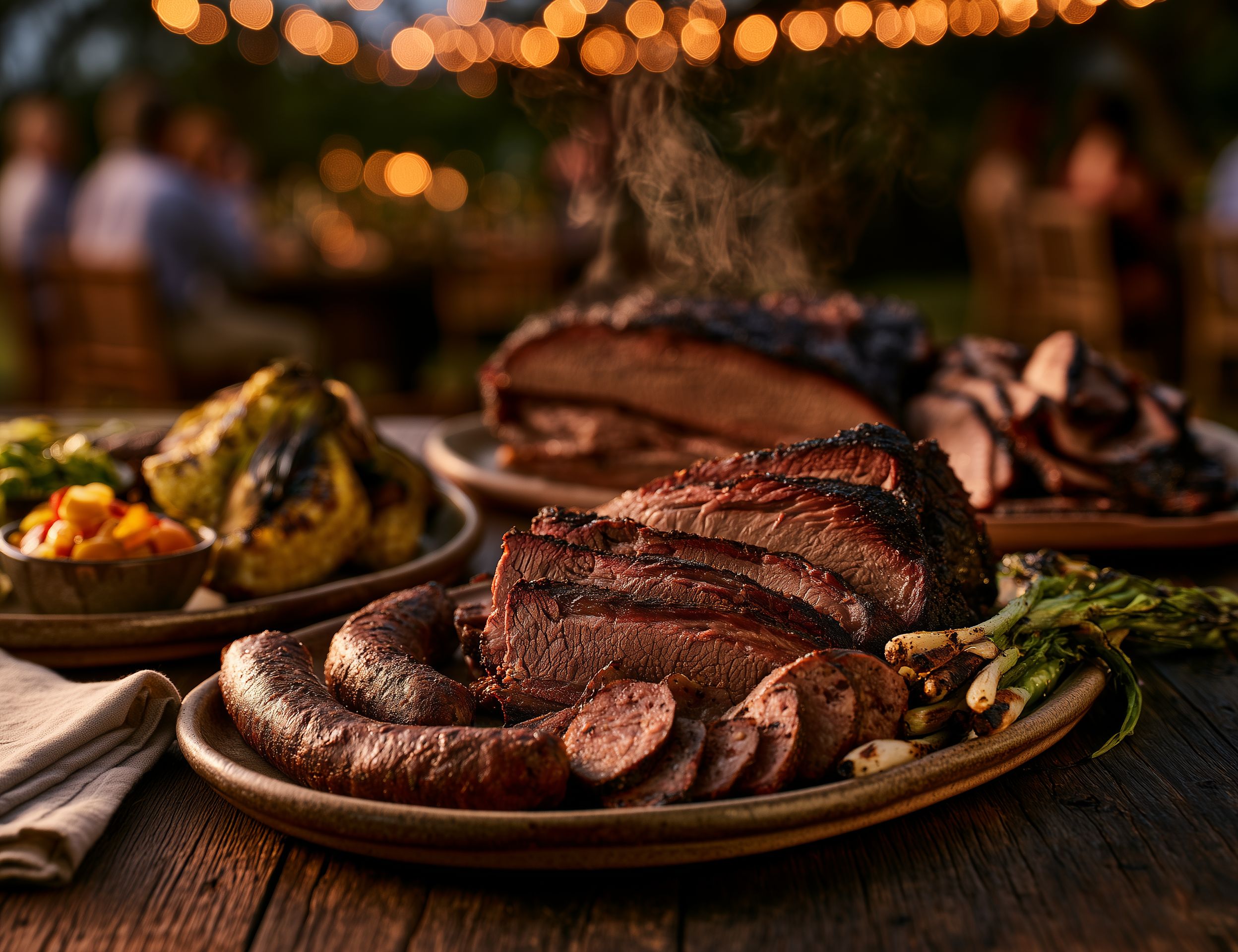
Served with smoked sausage, grilled vegetables, charred corn, pickles and a few sharply dressed salads, barbecue becomes ideal food for this kind of gathering. It is communal without being formal. It can be eaten at a dining table, beside the fire or standing beneath the oak. And it improves rather than suffers from a little mess. That may be its greatest virtue.
A Party Needs More Than Adults Holding Wine

Some of the most memorable evenings are the ones where nobody has tried to separate adults from children too carefully. Give children something to do and they will often create their own parallel party. A small fire, marshmallows and enough supervision can become an evening’s entire entertainment. The adults hear laughter from one part of the garden while music carries from another.
The gathering becomes larger than any single conversation. Dogs move through the same landscape. Children disappear and reappear. Someone changes seats. Dinner continues. The evening develops its own geography.
And Then the Lake Goes Quiet
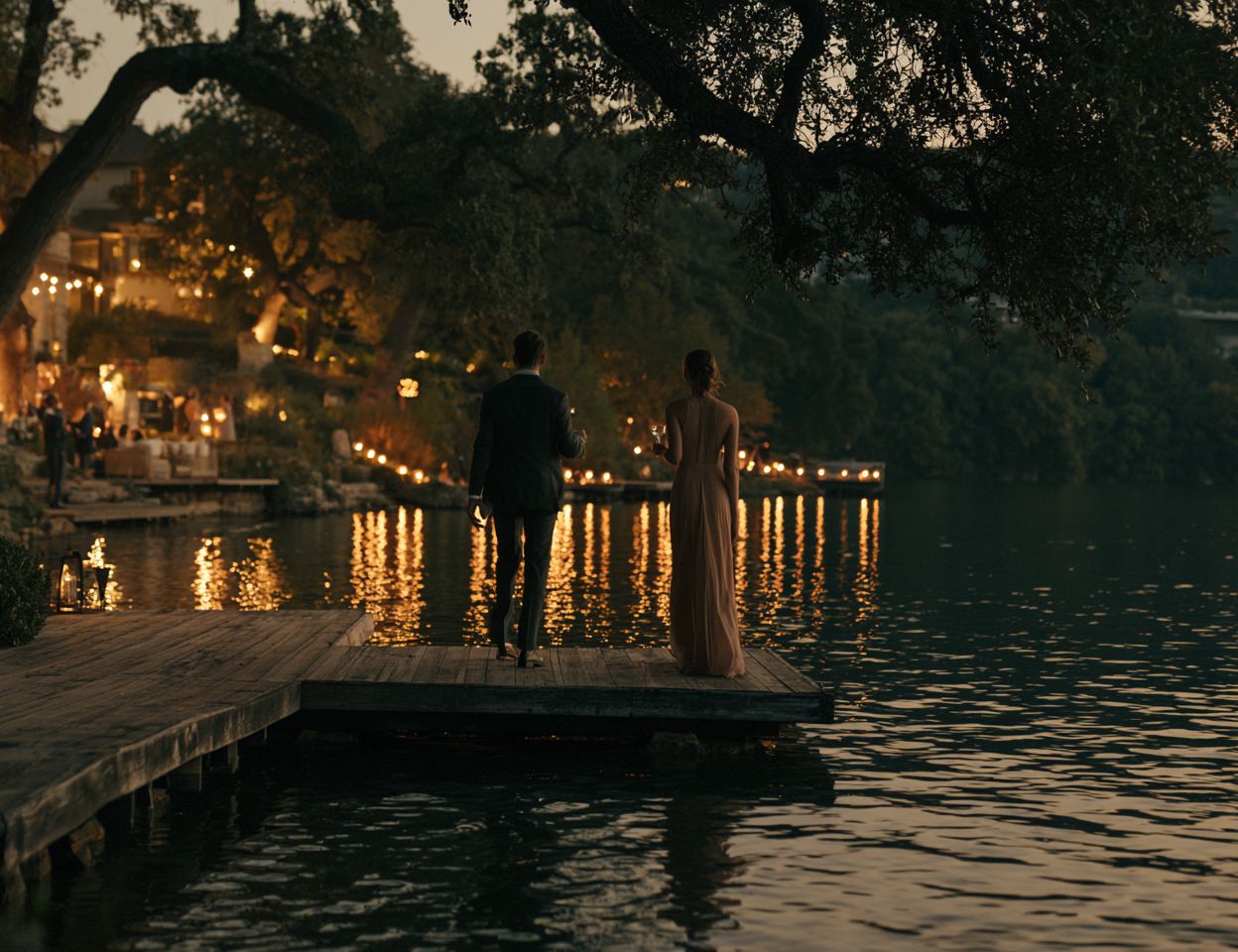
Eventually even a lively party begins to thin at the edges. Someone walks toward the dock. Music is still audible but softer now. Across the water, the house and garden lights have become reflections rather than architecture, stretching and breaking across the surface of the lake.
This may be the point at which the evening finally reveals what made it successful. Not the brisket, not the band, not the furniture, lights or even the view. It is the fact that nobody was required to experience the party in exactly the same way. Some people sat near the fire. Others listened to music. Some stayed at the table. Someone spent half an hour talking beside the water. Children toasted marshmallows while adults opened another bottle of wine.
The host created the conditions, then stepped away. There is a kind of hospitality that tries to anticipate every moment, and another that simply makes good moments possible. Autumn in Austin favors the second. The air is finally cool enough to stay outside, the oak branches hold the last warmth of the day, and the lake makes the lights appear twice.
At some point the music stops. Conversation carries on. And for a little while longer, nobody feels any particular reason to leave.
SEASONAL LIVING RECIPES
The party drink is designed for advance preparation and can be served either with blanco tequila or as a zero-proofversion.
Texas Ruby Ranch Water
Serves 8 · Makes 1 pitcher · Prep 15 min · No cook · Cocktail or zero-proof
View & Download the Recipe Card (PDF)
UNTIL NEXT TIME…
Design is more than aesthetics — it’s a seamless continuum that connects the way we live, work, and gather. Explore new perspectives, timeless craftsmanship, and inspired living with us!
Stay connected to the Seasonal Living Design Continuum Journal. Subscribe today to receive our latest journal entries!