How local food, natural materials and an unhurried afternoon turn a Wisconsin gathering into something memorable
There is a particular kind of afternoon in the upper Midwest that does not need much improving. The sun sits low enough to warm everything it touches. Grasses have begun to bleach from green into straw and honey, maples are turning unevenly through amber and rust, and the lake takes on the slightly steely clarity that arrives as the air cools.
This is not quite summer anymore, but neither is it the deep retreat of late autumn. It is that brief, generous middle period when being outdoors still feels instinctive, but the season has started asking for warmer clothes, deeper flavors and a little more comfort. In Wisconsin, that transition has its own rhythm.
Autumn entertaining here does not need to borrow the visual vocabulary of harvest festivals. The color is already in the grasses, orchard fruit and changing trees. The texture is in stone, timber, woven fiber and the rough crust of good bread. The food arrives from nearby farms, orchards, bakeries, fisheries and dairies. The furniture only needs to make staying outside feel easy. That is where this gathering begins.
The Outdoor Room Should Feel Collected, Not Staged
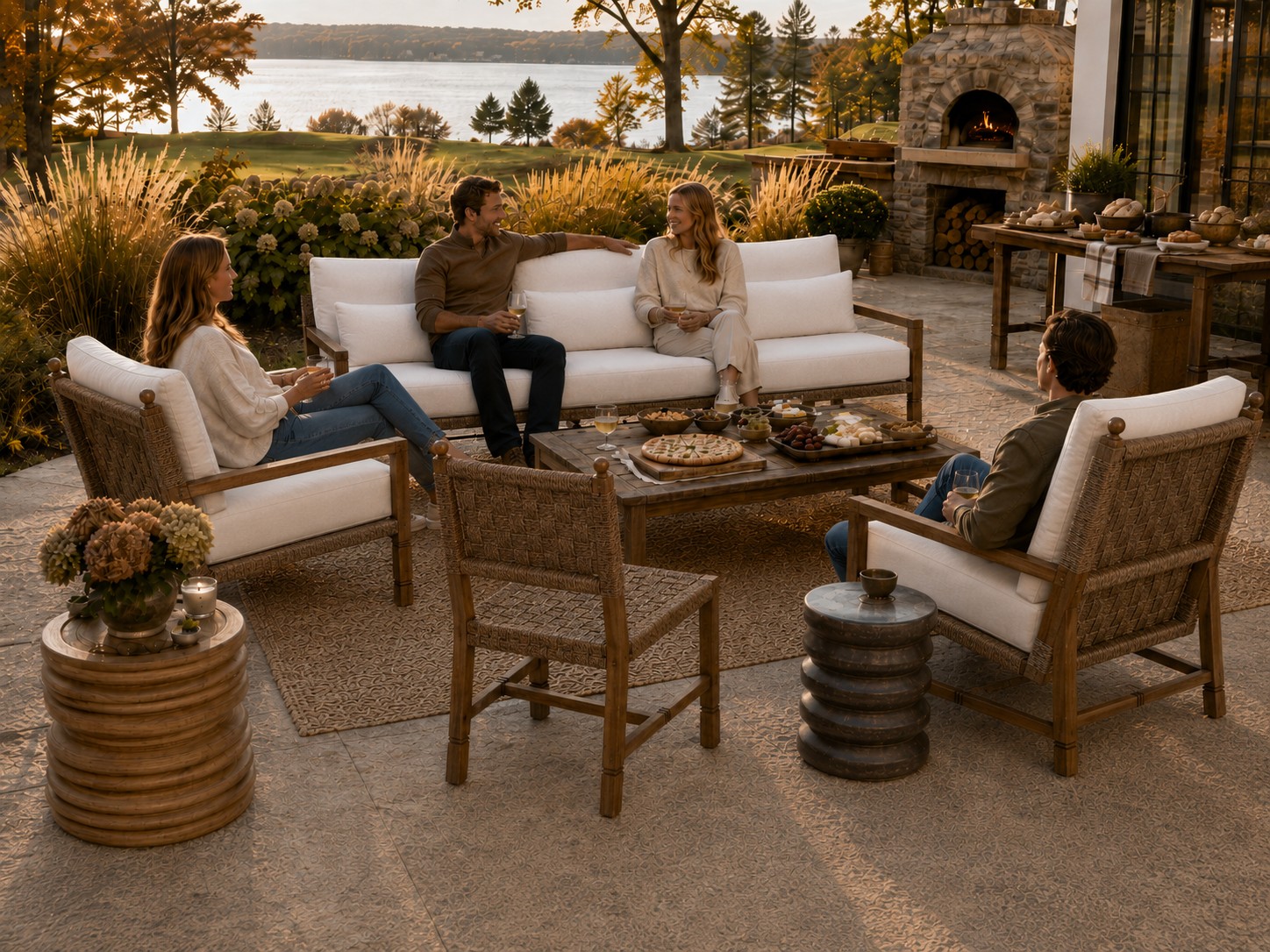
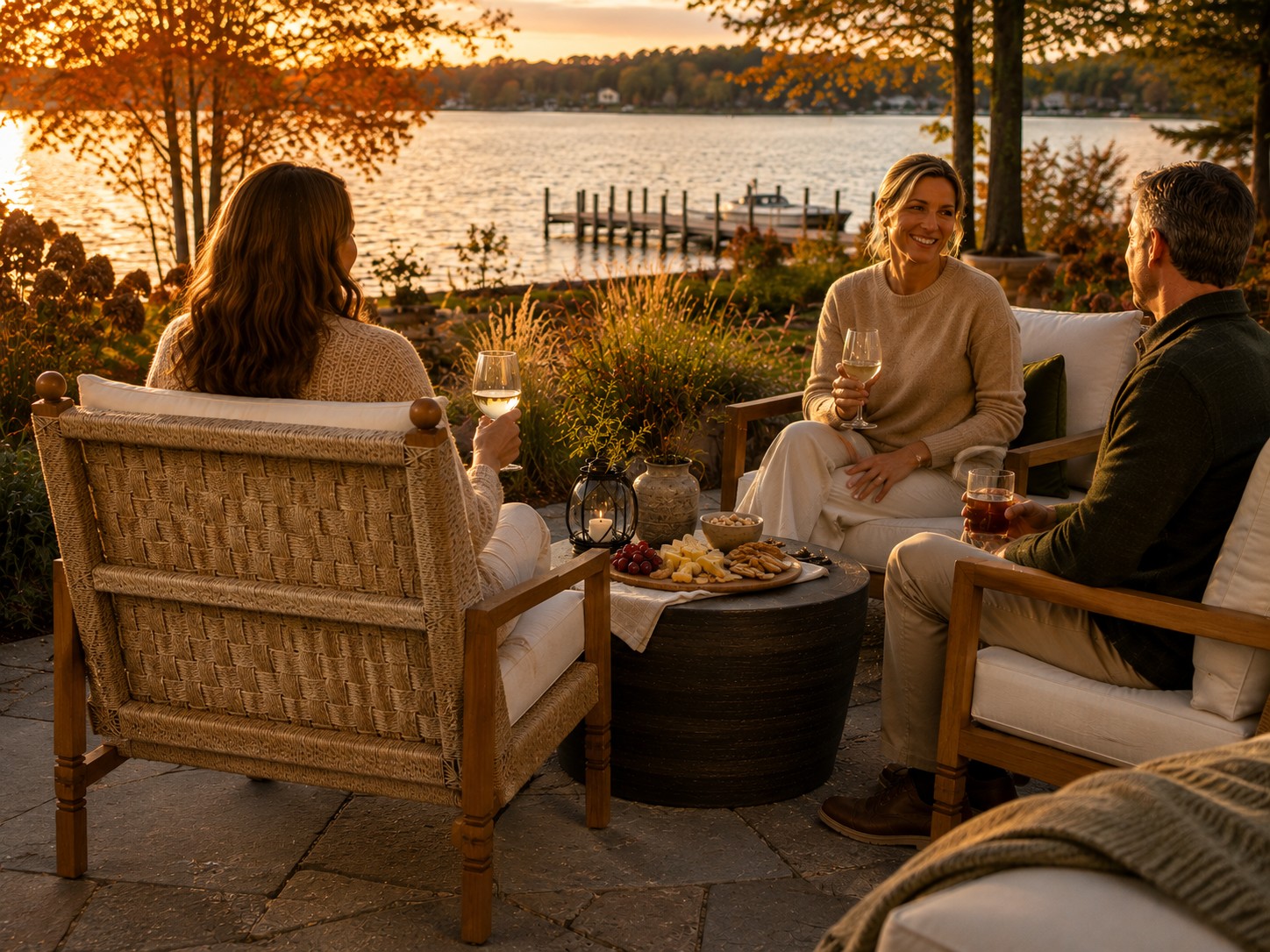
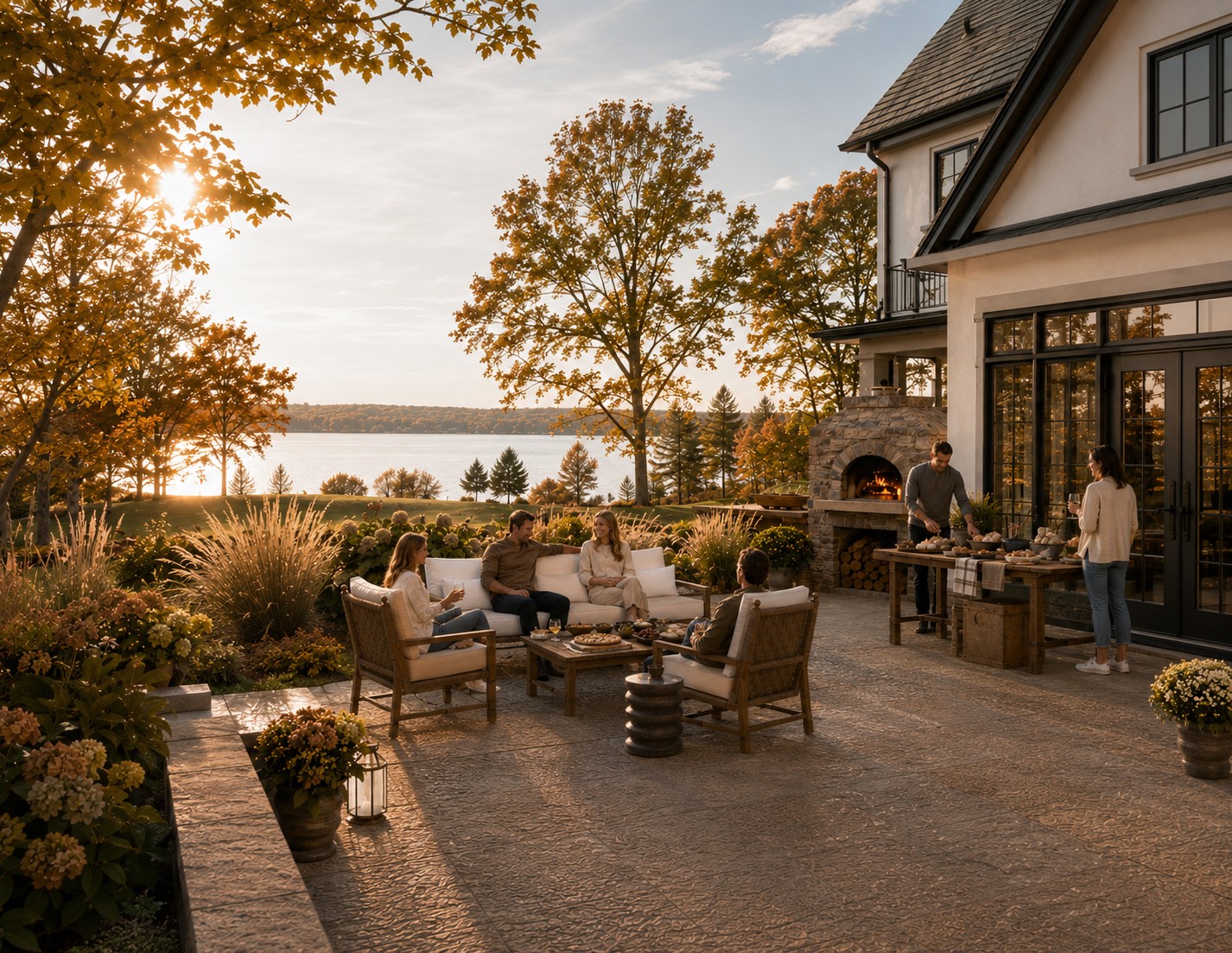
The setting is relaxed rather than formal: a generous Vaterra sofa, lounge chairs, a woven dining chair pulled casually into the group, and ceramic tables doing what good occasional tables should do — holding a drink, a bowl, flowers, a plate, something somebody has just set down. Nothing is arranged around a ceremonial centerpiece. Instead, the furniture creates a loose social room outdoors.
A traditional dining setting organizes people around a table. A lounge setting allows the gathering to behave more naturally. Someone leans back. Someone turns sideways in a chair. Another person arrives with a plate and takes the nearest available seat. The effect is less like “entertaining” and more like spending a very good afternoon together.
Preservation as Color
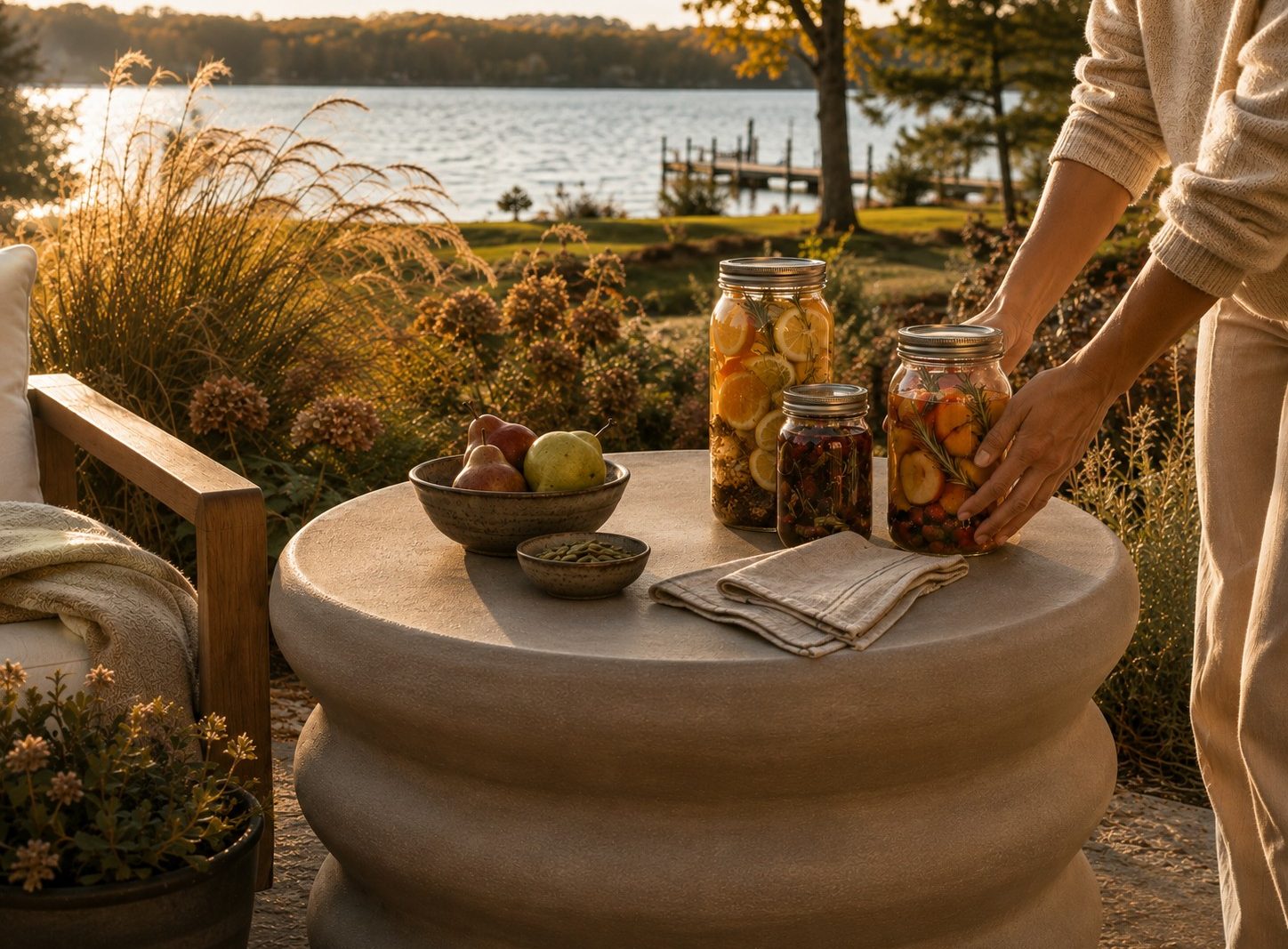
One of the most beautiful ways to bring seasonal color into a neutral setting is also one of the oldest: preserving. Jars of late-summer fruit, citrus, herbs, spices and vegetables become almost decorative when placed together, but their appeal comes from the fact that they are useful.
Autumn has always been a season of keeping — keeping fruit, herbs, vegetables and flavor. Before refrigeration made almost everything available all year, the transition into fall was defined by the work of extending abundance into the months ahead. Bringing that instinct back into contemporary entertaining feels less nostalgic than intelligent: a jar of preserved fruit becomes a cocktail ingredient; pickled vegetables sit beside cheese; herbs flavor oil or vinegar; fruit syrup becomes a zero-proof drink.
Food Should Look Like Where You Are
The most successful regional entertaining does not need to announce its geography. It simply makes choices that belong there. In Wisconsin, dairy is not an afterthought. Cheese matters. So do bread, orchard apples, corn, mushrooms, tomatoes, herbs and freshwater fish. The idea is not to assemble a menu of clichés. It is to let proximity shape the table.
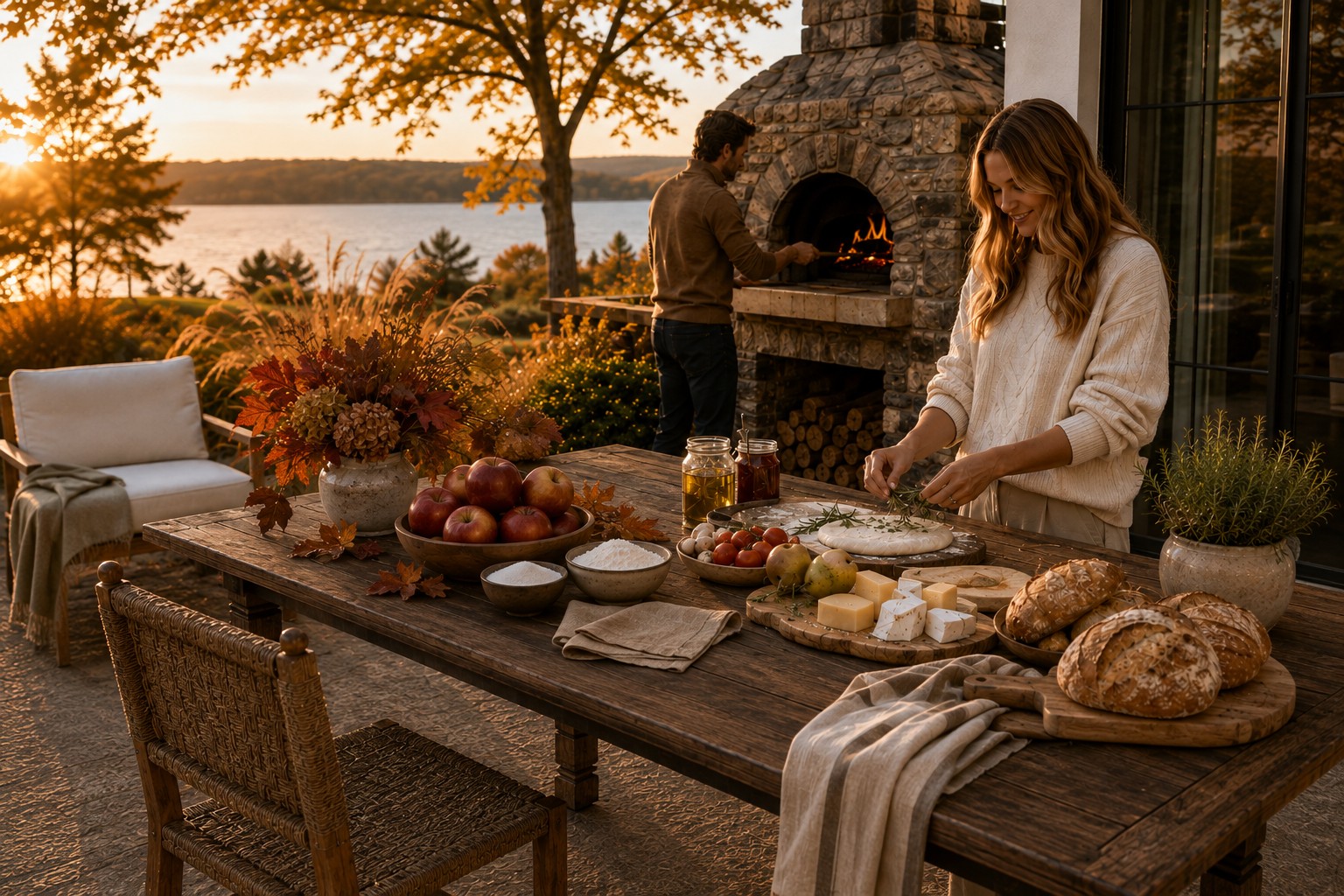
The wood-burning oven becomes the natural center of activity because fire makes preparation social. Someone tends the oven while someone else works at the table. Guests can see what is happening without being formally seated. The long table becomes a working surface rather than a piece of furniture waiting politely for dinner.
The Ingredient Table: Craft Before Convenience
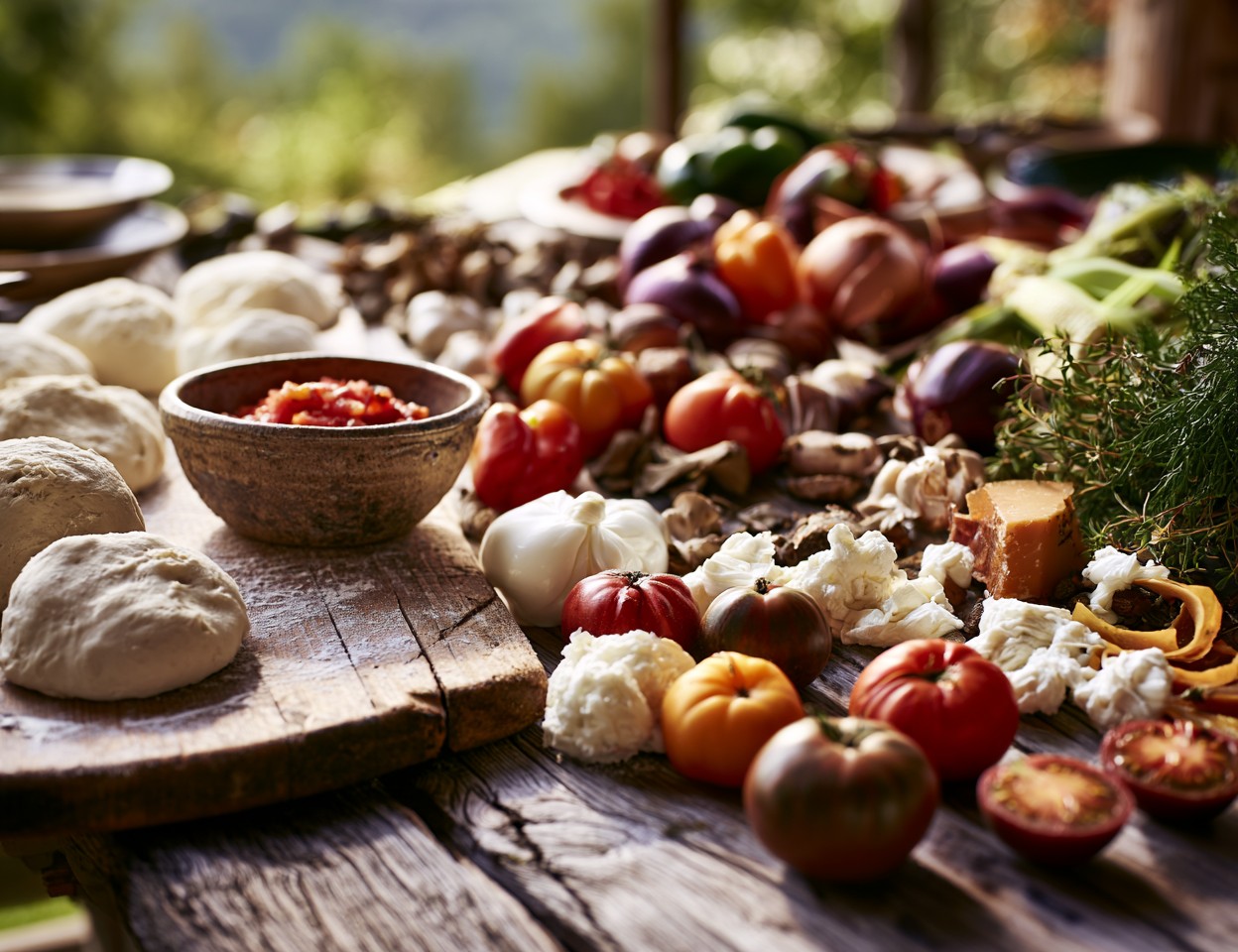
There is something visually irresistible about ingredients before they become a finished dish: tomatoes indifferent colors and shapes, soft cheese beside aged cheese, onions with their skins still on, herbs loosely gathered, mushrooms, garlic, corn and balls of dough waiting to be stretched. At this point the table is almost a portrait of the season.
But it is also a portrait of people. A loaf from a small bakery carries the decisions of a baker — flour, fermentation, crust, timing. A regional cheese carries the choices of a dairy farmer and cheesemaker. Orchard apples arrive with varieties, weather and a particular year attached to them. This is what craft food gives us that industrial sameness often cannot: evidence of a maker and a place.
In a world optimized for consistency, regional food protects difference. One Wisconsin apple should not have to taste like every apple available twelve months a year; a cheese made nearby need not imitate a national brand; a loaf can be darker one week, more open-crumbed the next. Variation is not a defect when it comes from season, soil, fermentation and handwork. It is character.
Why Regional Food Matters Beyond Taste
Choosing food from smaller regional producers is not automatically healthier or greener simply because it is local; those claims depend on what is grown, how it is produced, how it travels and what replaces it in the diet. The more useful argument is practical. Local and regional systems can make fresh, minimally processed foods easier to see, understand and cook with, while creating a closer relationship between eater and producer.
For health, the strongest advantage is not a postcode but a pattern: cooking meals around vegetables, fruit, beans, whole grains, dairy, fish and other recognizable ingredients, while limiting highly processed foods, added sugars and excess sodium. A farmers’ market or regional producer can make that pattern more pleasurable because freshness, seasonality and flavor encourage simpler cooking.
For the environment, distance alone is not a complete measure of impact. Production method, storage, refrigeration, waste and transport efficiency all matter. Yet regional systems can shorten supply chains, reduce some transport and handling, create outlets for seasonal crops, and strengthen markets for diverse varieties that may not suit national distribution. They can also make food waste more visible and easier to redirect through local networks.
For the economy, the effect is tangible in human terms. Money spent with a nearby farmer, baker, cheesemaker, orchard, fishery or small processor supports businesses that employ people, buy services and maintain productive land in the region. Small family farms remain especially important in direct-to-consumer sales, and local food markets can act as incubators where small producers test products, build customers and grow.
That is why food regionalism matters in a culture increasingly flattened by national sameness. Regionalism keeps culinary memory alive without turning it into museum culture. It allows Wisconsin to taste like Wisconsin, Provence to taste like Provence and Texas to taste like Texas. Difference becomes something to protect, not engineer away.
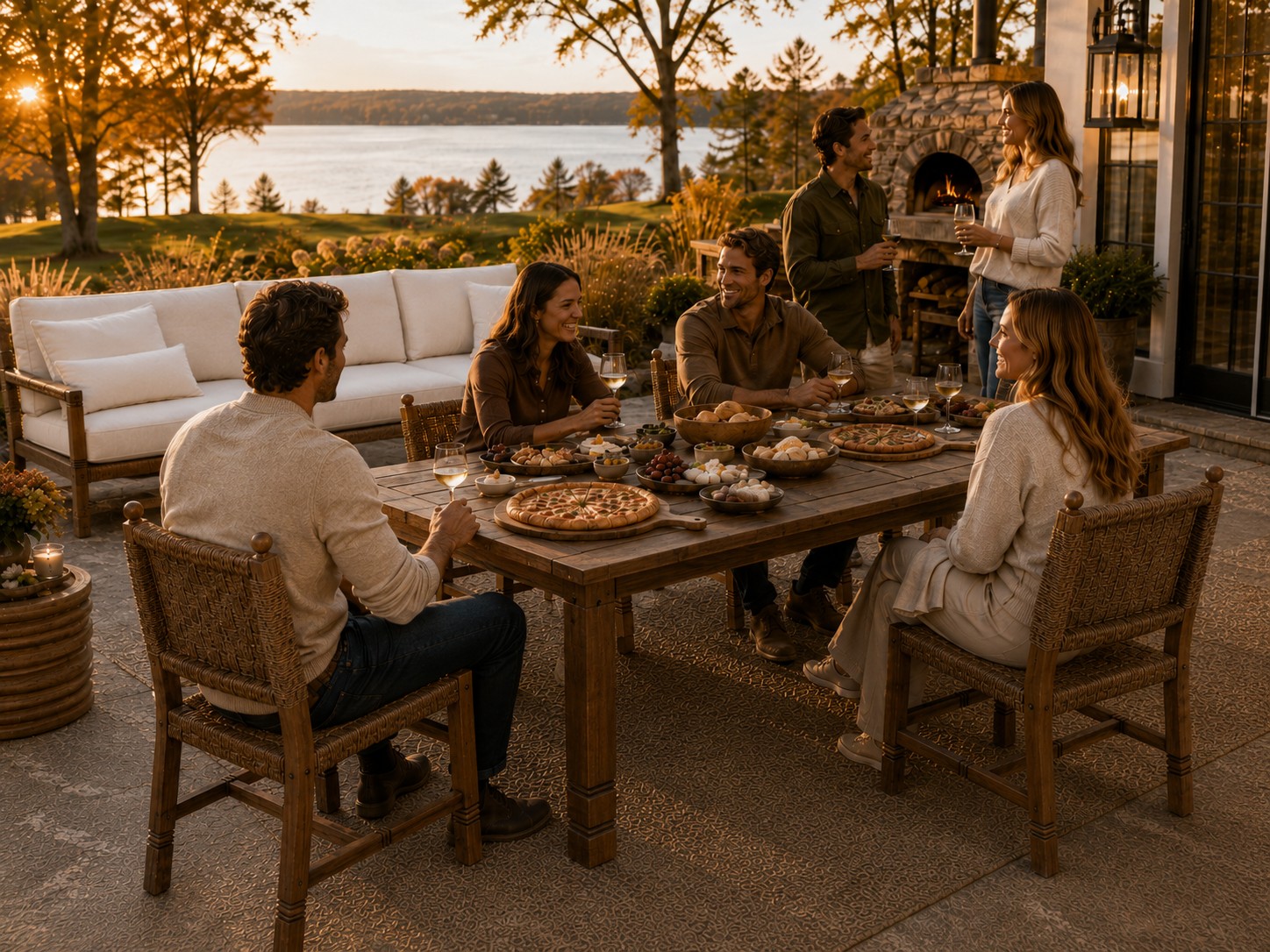
The host does not disappear into a kitchen. Preparation becomes part of the gathering. That may be one of the most compelling arguments for an outdoor kitchen: not the equipment itself, but the social change it permits. Work that would ordinarily happen behind a wall happens in company.
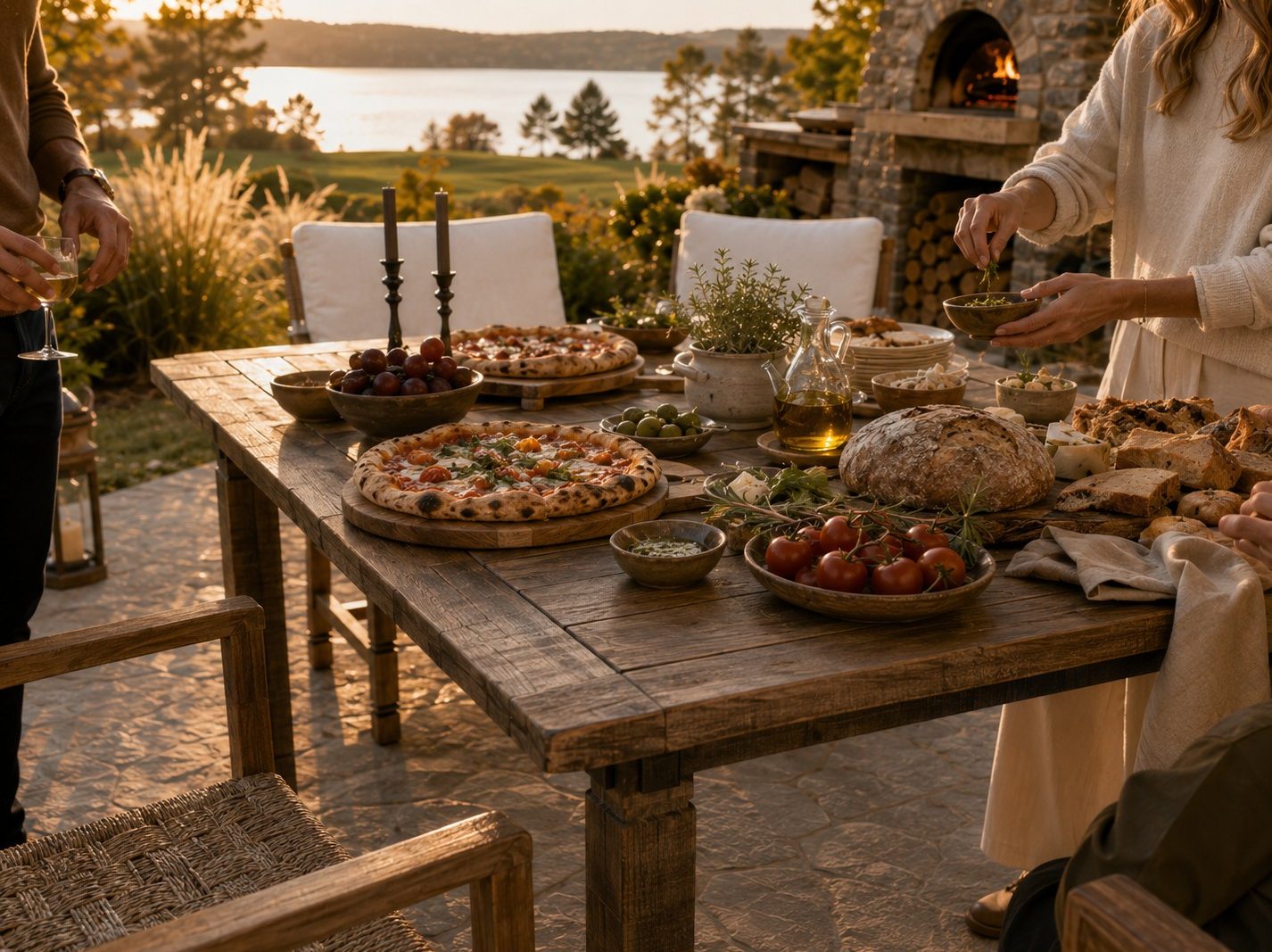
A good regional table does not require virtuosity. It requires confidence in ingredients. Bread can be torn rather than plated. Cheese can be served in generous pieces. Tomatoes can remain tomatoes. Pizza can carry their regular char of a real fire. Craftsmanship is not fussiness; it is care made visible.
Two Recipes That Belong to This Place
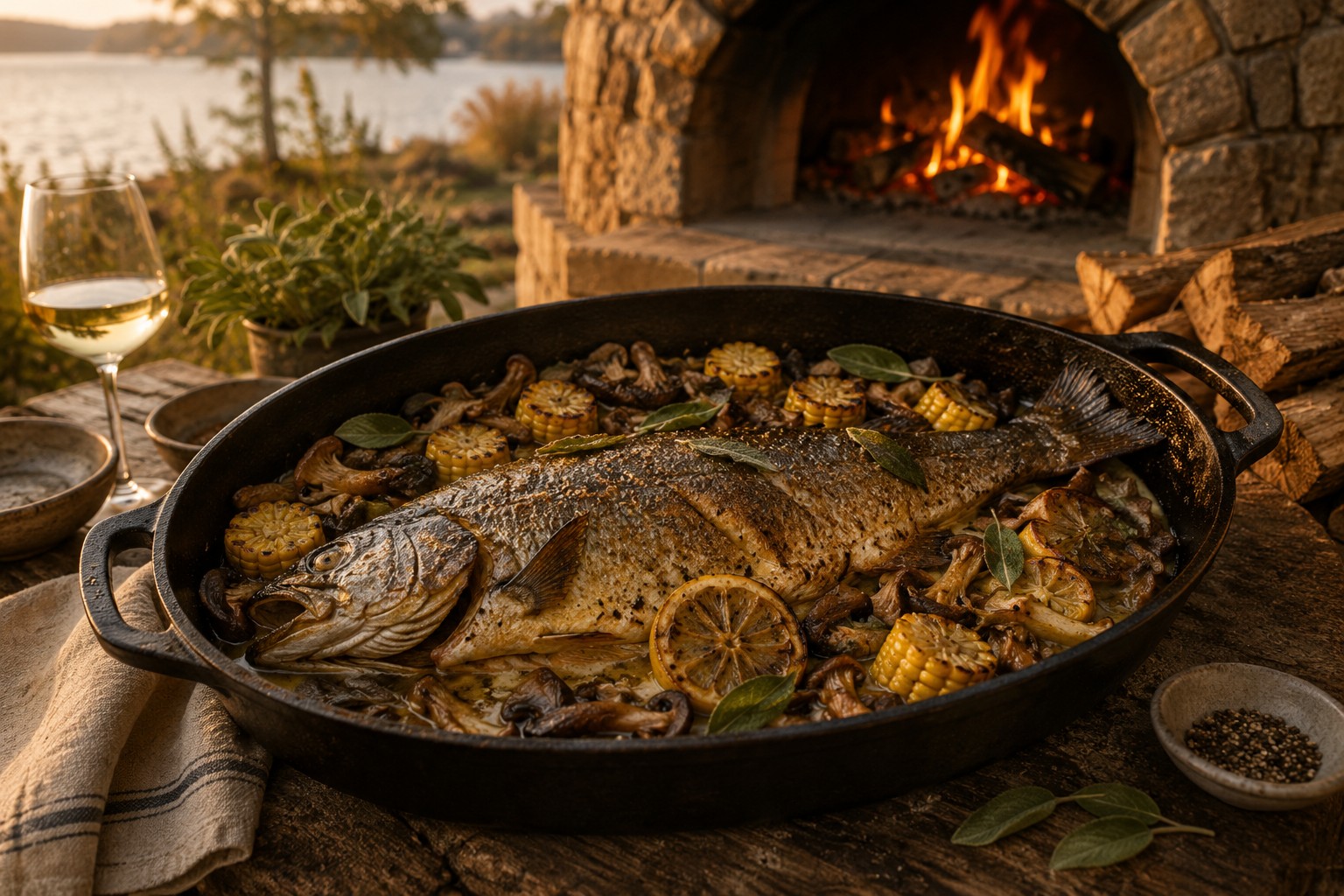
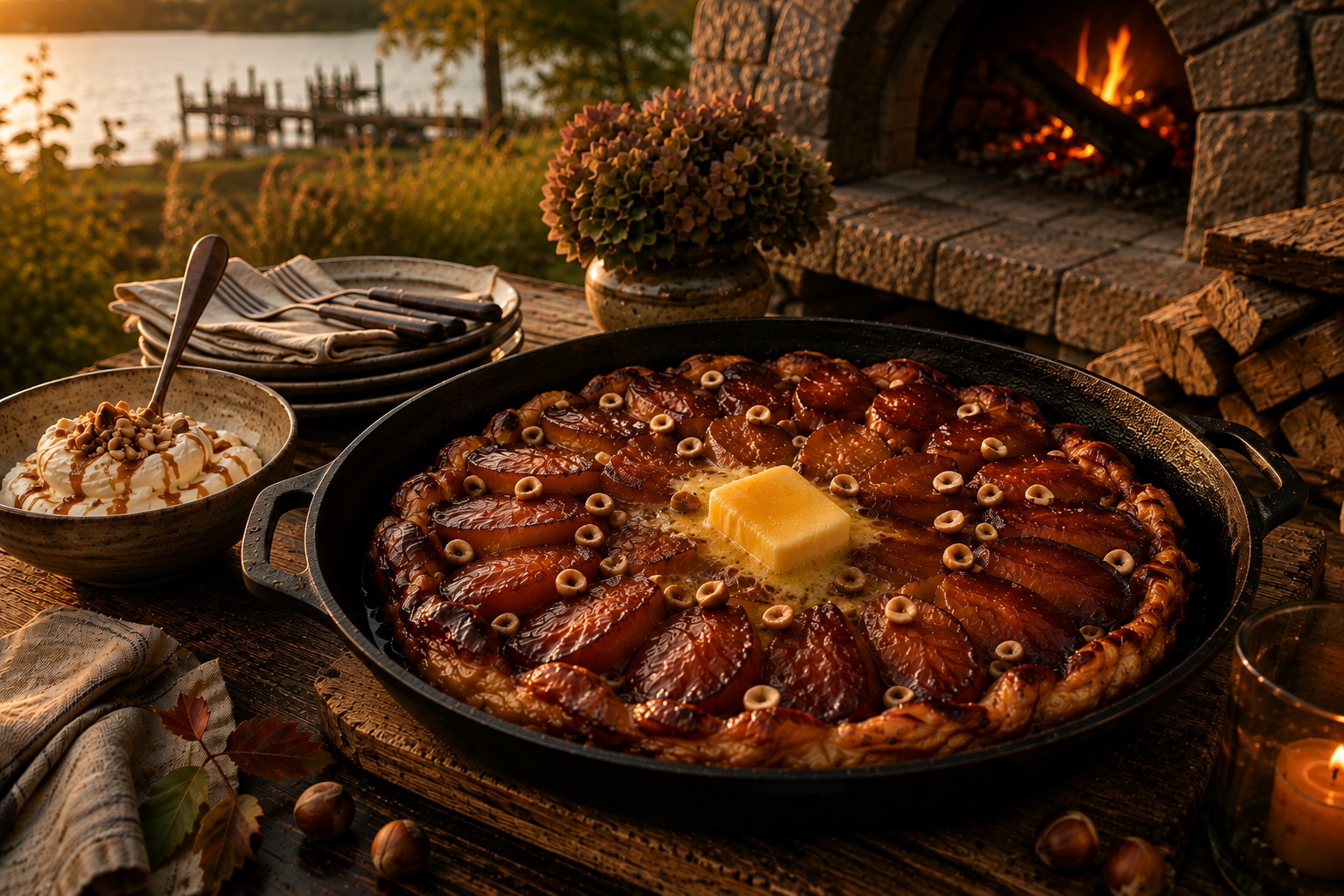
The menu follows the same rule as the design: use what belongs, let materials speak for themselves, and avoid unnecessary decoration. A whole trout and a cast-iron apple tarte Tatin are generous enough for a gathering but neither asks the host to perform restaurant theatre.
Let the Afternoon Stay Afternoon
One of the most deliberate choices in this gathering is the time of day. There is no attempt to turn every outdoor setting into nighttime theatre. The sun is low, but the day is still present. Autumn light moves across texture, catches the tops of grasses, makes timber warmer and gives the lake gold, silver and pale grey rather than simple blue.
A successful long lunch should resist the temptation to end. Some food remains on the table. Another glass is poured. The temperature drops slightly. A sweater comes out. People shift seats. Conversation divides and reforms. There is no need to declare that lunch has become dinner. It simply has.
And perhaps that is the best definition of quiet luxury outdoors: not having more, but paying closer attention to what is already good — a landscape entering a new season, furniture that lets people stay, food made by people rather than systems, and enough time to taste the difference.
RECIPES FROM THE LONG LUNCH
The recipes are referenced in the editorial above; full recipe cards are maintained separately.
Wood-Fired Wisconsin Trout
Wood-Fired Wisconsin Apple Tarte Tatin
UNTIL NEXT TIME…
Design is more than aesthetics — it’s a seamless continuum that connects the way we live, work, and gather. Explore new perspectives, timeless craftsmanship, and inspired living with us!
Stay connected to the Seasonal Living Design Continuum Journal. Subscribe today to receive our latest journal entries!