A California Thanksgiving shaped by fire, wine, landscape and the pleasure of staying a little longer
There is a moment before a gathering when a house seems to know what is about to happen. The kitchen has begun to warm, candles have been checked but not yet lit, the table is waiting, and somewhere beyond the terrace the vineyard has turned the particular copper-red of late November. Nobody has arrived. For a few minutes, hospitality is still private.
In California wine country, that quiet interval may be the most beautiful part of Thanksgiving. The air is cool enough to make a jacket welcome after sunset, yet the afternoon still carries warmth. Grapes have mostly left the vines. Olive leaves flash silver when the wind moves through them. Smoke from a wood-burning oven hangs briefly above the kitchen before disappearing over the rows.
The day ahead will contain abundance, certainly, but it need not become a performance of abundance. The more interesting idea is simpler: design a place where people can move easily between fire, kitchen, table and shelter, and then let the landscape do most of the decorating.

A Table Belongs to Its Landscape
Across this autumn series, place has repeatedly been allowed to lead. In The Dinner Begins at the Market, Provence reminded us that a meal can start long before anyone sits down. The Long Lunch: Autumn by the Lake showed how Wisconsin’s water, farms and wood fire can determine the rhythm of an afternoon. Music Under the Oaks let an Austin evening spread naturally between house, trees, fire and lake rather than forcing everyone into a single formal zone.
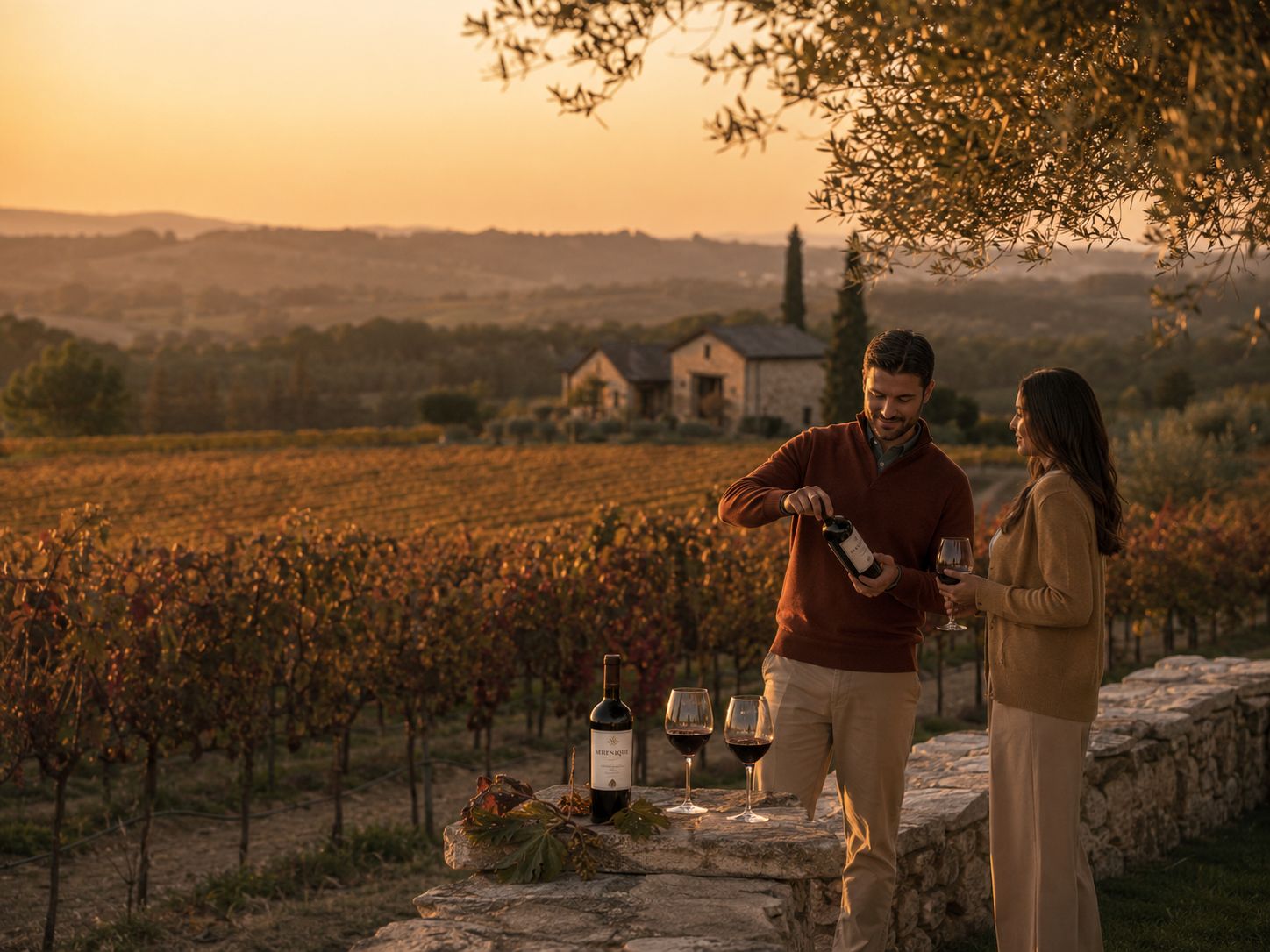
A California vineyard asks for the same respect. There is no need to import an idea of Thanksgiving and place it on top of the land. The land is already giving us the palette: weathered timber, pale stone, olive green, fading vine leaves, deep wine red, and the soft gold of the last hour of sun.
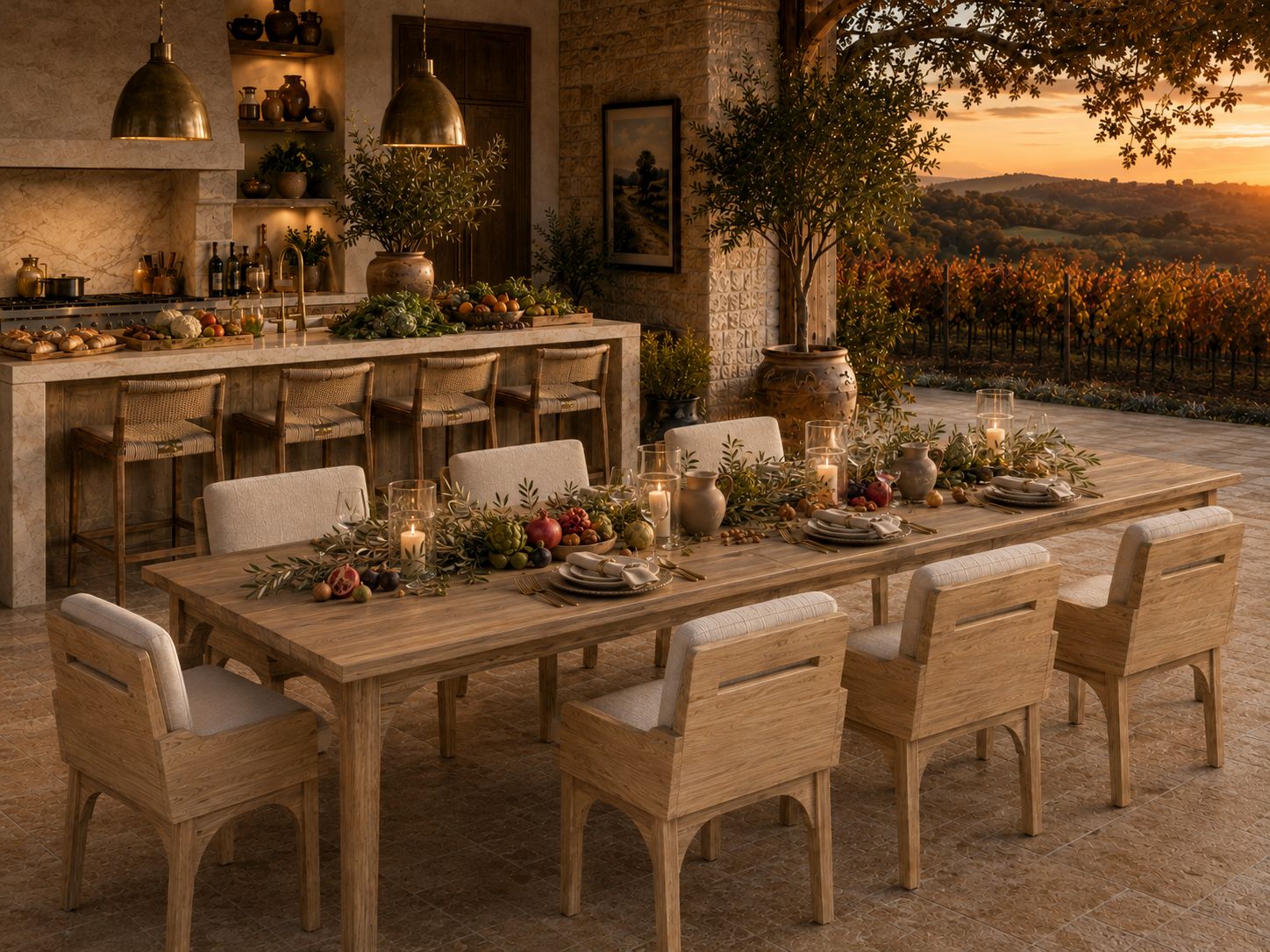
That restraint matters at the table. Rather than piling on pumpkins, themed linens and literal harvest decoration, use what belongs here: clipped olive branches, artichokes, pomegranates, grapes, persimmons, a few low ceramic vessels, clear glass, linen and candles protected by hurricanes. The result still reads unmistakably as autumn, but it reads first as California.
Design the Gathering as a Sequence
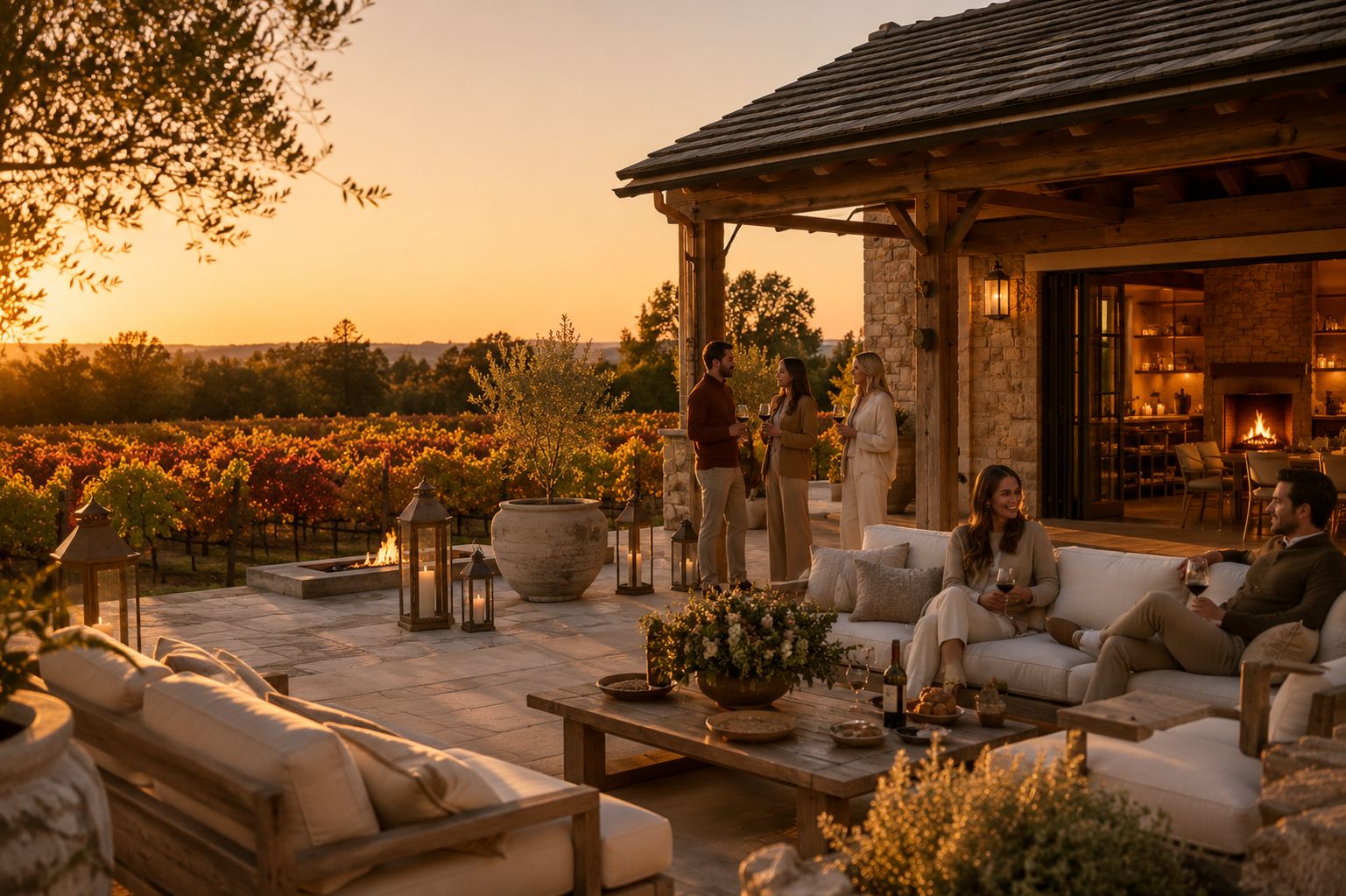
A successful Thanksgiving is not only a table plan. It is a movement plan. Guests should understand where to go without being instructed. The pavilion and terrace become the first pause: a glass of wine, something warm from the oven, a place to sit while the kitchen remains active nearby. From there, the landscape pulls people outward toward the vines, then back toward the long dining table as the light begins to drop.
This is where indoor-outdoor design earns its place. Large openings blur the threshold between pavilion and terrace; lounge seating gives people somewhere to settle without committing them to dinner; the outdoor kitchen keeps the cook in the social geography of the gathering rather than disappearing behind a wall.
Seasonal Living’s Serenique collection belongs naturally in this kind of environment because its teak architecture has enough presence to hold its own against stone and vineyard without becoming theatrical. The dining table, at 102 inches long, is generous without pretending to be a banquet table. The chairs are substantial enough to be comfortable through a long meal, yet visually open enough that the landscape remains part of the room.
This is the Design Continuum in practical terms: not matching everything, but allowing proportion, tone, material and function to connect the pavilion, terrace, kitchen and dining space into one larger environment.
Drink the Place You Are In
Wine at a vineyard Thanksgiving should be more than a pairing note. It is part of the geography. There is something quietly extraordinary about drinking wine made from fruit grown within sight of the table, because the glass becomes another way of reading the landscape.
A good California Pinot Noir, served slightly cool rather than warm, works beautifully with roasted poultry, herbs and the sweeter edges of autumn vegetables. A restrained Chardonnay can do the same from the other direction, bringing acidity and breadth without overwhelming the food. The point is not to construct a tasting exercise. It is to choose wine that belongs to the meal and then let people enjoy it.
For readers who enjoy exploring the ratings and producers behind the choices, Wine Spectator remains a useful independent reference point for California wine.
Cook Where the Fire Is
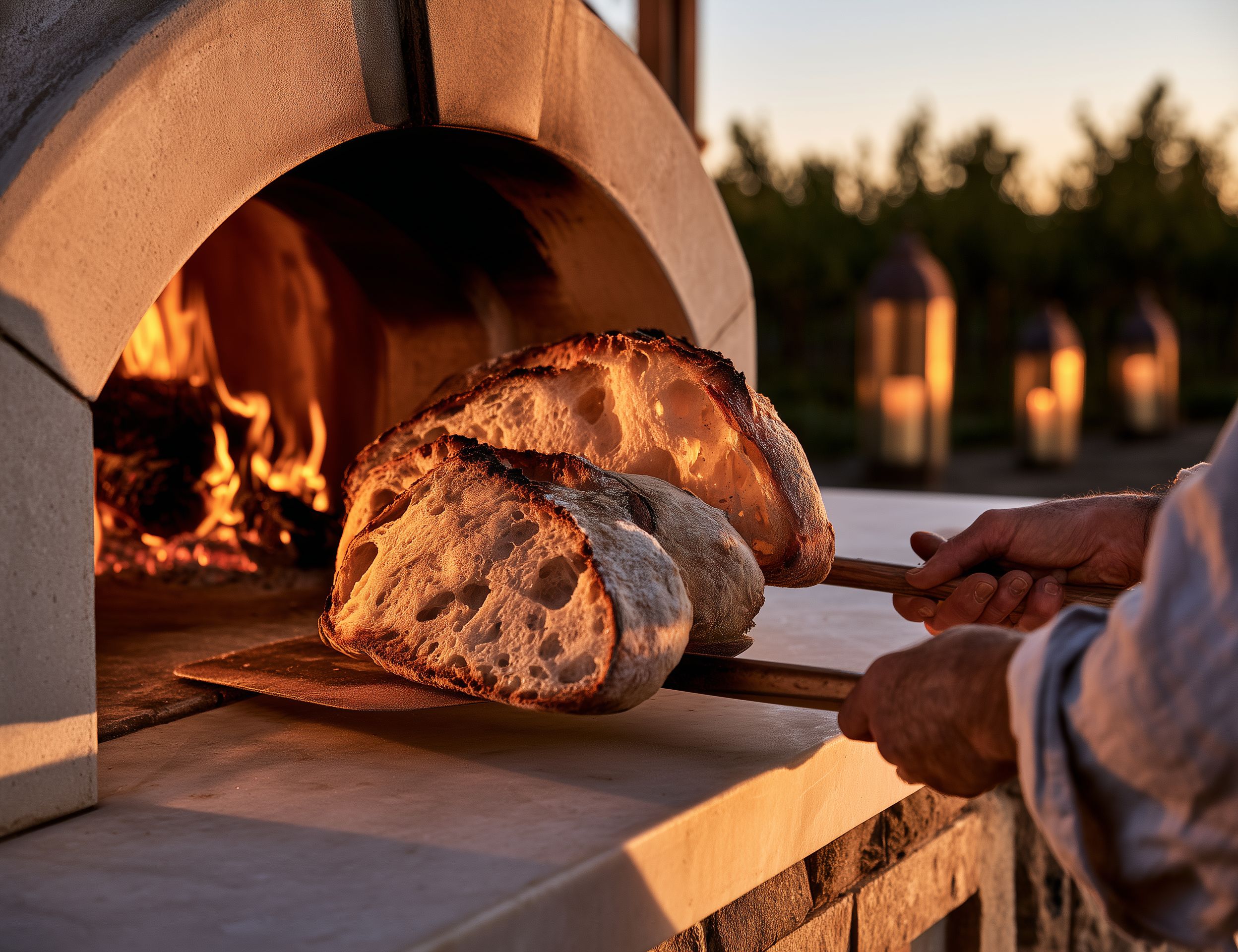
The wood-burning oven changes the atmosphere before it changes the food. It gives the kitchen a center. Someone checks the fire. Someone slices bread. Herbs are gathered from pots. Vegetables wait on the island. The cook remains visible, and the preparation becomes part of the gathering rather than something hidden from it.
The first food should reward that informality: crostini with roasted delicate squash, Taleggio, toasted hazelnuts, sage and honey. They are substantial enough for a cool afternoon, but small enough to pass while people are still moving. The squash can roast near the wood fire, the bread can take on a little char, and the Taleggio only needs enough heat to soften.
The important hosting decision is that the first course does not trap anyone in assembly. Prepare the components ahead, finish the crostini in batches, and put them into circulation. Guests should notice the warmth and flavor, not the logistics.
Thanksgiving Without Excess
There is a tendency to confuse generosity with quantity, especially at Thanksgiving. But a table does not become more generous merely because it is crowded. A well-chosen meal can feel abundant while remaining edited: something warm to begin, one beautiful main dish, a few vegetables, very good bread, wine, and a dessert that knows when to stop.
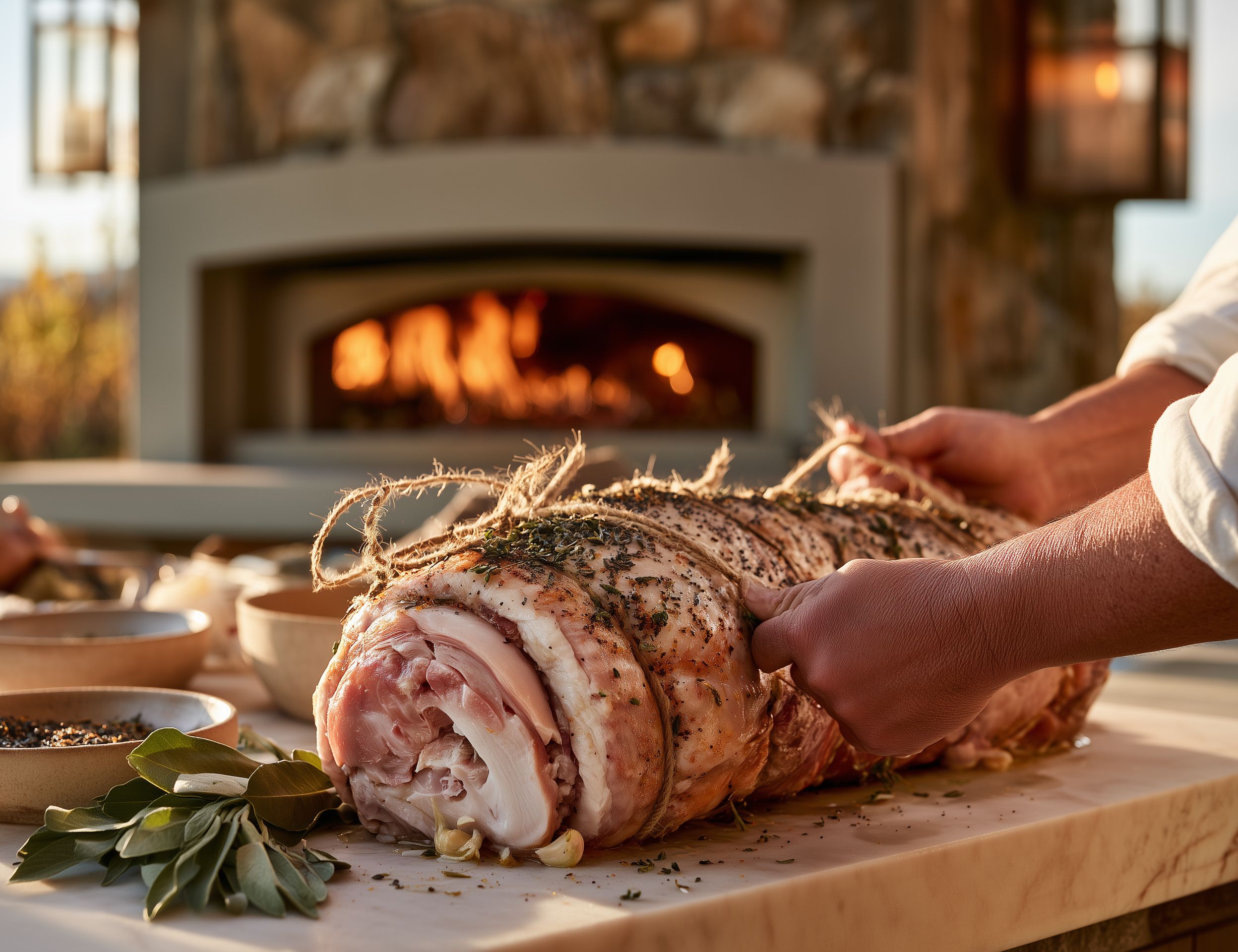
The centerpiece here is a wood-roasted herb turkey roulade rather than an enormous whole bird. Rolled with leek, shallot, sage, rosemary and thyme, it gives the table everything people want from Thanksgiving — aroma, ceremony, crisp skin, savory juices — while carving far more gracefully. Presented whole on an oversized platter with bay, sage, persimmons, pomegranate and roasted shallots, it still has the arrival moment a holiday meal deserves.


Let the Table Become Slightly Untidy
Once the food reaches the table, design should begin surrendering control. A perfectly composed table is lovely before people sit down. Ten minutes later, napkins move, wine bottles migrate, serving spoons change direction and somebody puts a piece of bread where no stylist would have placed it.
That is not the deterioration of the setting. It is the setting beginning to work.
The Serenique table should remain visible beneath the meal rather than disappearing under it. Keep the decoration low and linear, leave breathing room between serving pieces, and allow a few generous platters to create the sense of occasion. The furniture is there to support the life around it, not demand attention from it.

The Light Changes, So Should the Room
Thanksgiving in California can begin outdoors in warm sun and end beneath a very different sky. That change should be anticipated rather than treated as a problem. Glass hurricanes that seemed decorative at four o’clock become necessary at five. Oversized lanterns begin to register against the vineyard. The pavilion glows more strongly as the land darkens.
The Architecture of Warmth explored the instinctive pull of fire in the Tennessee mountains; here, the same instinct appears in a gentler climate. People still move toward warmth. They still turn chairs. They still linger when light, shelter and a drink make leaving unnecessary.
A well-designed outdoor room therefore does not depend on perfect weather. It gives weather somewhere to go. Doors can remain open, then partly close. Dinner can begin outside and dessert can migrate back toward the pavilion. The gathering adapts without announcing that it is adapting.

A Dessert That Belongs Here
Pumpkin pie would be perfectly welcome, but it is not required. A California ending can be quieter: wood-roasted Bosc pears, a modest slice of olive-oil cake, crème fraîche, toasted hazelnuts and rosemary-bay honey. The pears echo the orchard; the olive oil belongs to the landscape; the herbs return us to the garden and fire.
Serve it with coffee back at the pavilion. The point is not to create another formal course. It is to give the evening a softer landing.

The Best Part Happens After Dinner
Eventually the table is no longer the center of the evening. Four or five people have moved back toward the pavilion. Someone has coffee, someone else keeps the last glass of wine, and the great doors remain open enough that indoors and outdoors are still difficult to separate. In the distance, the dining table has become only a glow among the vines.
This is the image that completes the argument of the season.
Good outdoor furniture matters because it makes these hours possible, but the goal is never to stage life around furniture. The goal is to design spaces so intelligently that furniture disappears into living: a chair turned toward a friend, a table holding the remains of dinner, a sofa taking the weight of people who are not yet ready to leave.
Perhaps that is what autumn has been teaching all along. The season is not asking us to retreat from outdoor life. It is asking us to notice it more carefully — the shorter light, the cooler air, the first need for fire, the taste of food that belongs to a particular place, and the pleasure of a gathering that changes shape as the day changes around it.
Thanksgiving is often described as a meal of gratitude. But gratitude is difficult to manufacture on command. It tends to arrive indirectly, in the things we suddenly notice because we have made enough room to notice them: a glass refilled without asking, smoke caught briefly in the cold air, candlelight on someone’s face, the vineyard disappearing into blue, and the realization that nobody seems particularly interested in going home.

RECIPES FROM THE VINEYARD TABLE
All recipes serve 8
Autumn Squash & Taleggio Crostini
Serves 8 · Makes 24 crostini · Prep 25 min · Cook 20 min
View & Download the Recipe Card (PDF)
Wood-Roasted Herb Turkey Roulade
Serves 8 · Prep 45 min · Cook approximately 1 hr 40 min–2 hr
View & Download the Recipe Card (PDF)
Wood-Roasted Bosc Pears & Olive-Oil Cake
Serves 8 · Prep 35 min · Cook 1 hr 10 min
View & Download the Recipe Card (PDF)
UNTIL NEXT TIME…
Design is more than aesthetics — it’s a seamless continuum that connects the way we live, work, and gather. Explore new perspectives, timeless craftsmanship, and inspired living with us!
Stay connected to the Seasonal Living Design Continuum Journal. Subscribe today to receive our latest journal entries!