An Autumn Day in Provence, and the Art of Making the Journey Part of the Meal
There are places where dinner begins in the kitchen. In Provence, it can begin miles away — on a bicycle, beneath plane trees, with an empty basket and no particular certainty about what will be eaten that evening.
October has loosened summer’s disciplined green into bronze, claret and fading gold. The sun still warms your shoulders as the road threads between vineyards, but every pocket of shade beneath the plane trees carries the first coolness of autumn. Somewhere beyond the next rise, bells travel from a village you cannot yet see. The air smells of pale dust, crushed leaves and warm earth, with a thin ribbon of woodsmoke escaping from a house hidden behind cypress and old stone.
Nothing has been cooked. No flowers have been cut. No glasses have been placed on a table. Yet dinner has already begun, because one of the pleasures of Provence is that food is not always separated from the rest of the day. The road to find it, the person who sells it, the café where you stop afterwards, and the landscape through which you carry it home can all become part of the eventual meal.
The market is not simply where dinner is purchased. It is often where dinner first acquires a story
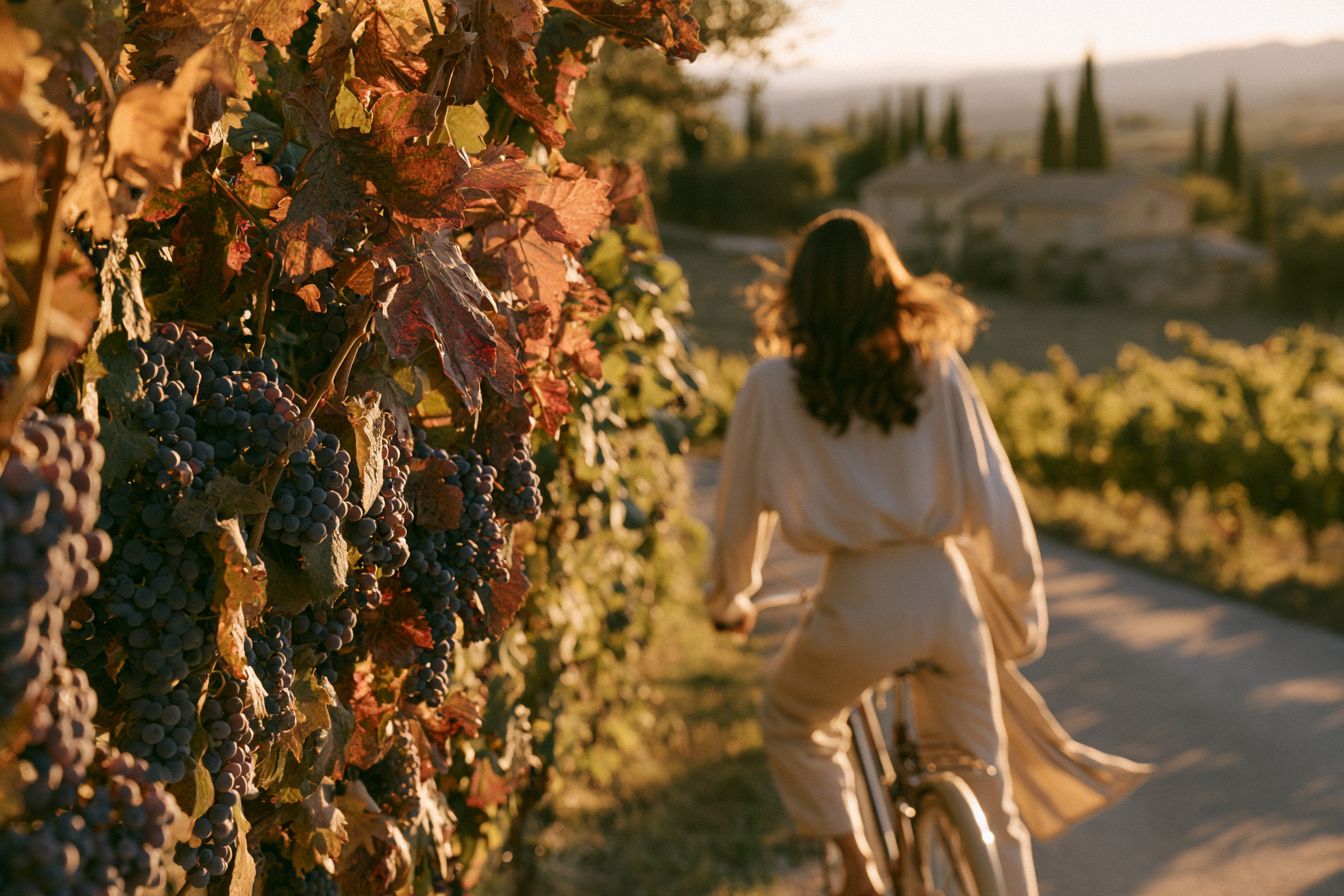
At the Speed of Autumn
A bicycle is a particularly good way to understand autumn here. A car frames Provence through glass; a bicycle lets Provence reach you. The temperature drops as the lane slips beneath trees, then lifts again beside an open vineyard. Gravel chatters beneath the tires. Stone walls pass close enough to brush with a hand. Olive branches bend under new fruit, and across the valley one slope remains green while another has turned the color of old Burgundy.
There is no need to romanticize the inconvenience. Hills remain hills, and a basket becomes considerably less charming once it is full of bottles, cheese and vegetables. But inconvenience has its rewards. We have become very good at removing friction from daily life through faster roads, faster shopping and groceries delivered to the door. All are useful inventions, yet sometimes the supposedly inefficient part was where the pleasure lived.
Moving slowly permits the world to interrupt you. A view makes you stop. A vineyard makes you wonder about the bottle you might open later. A roadside fig tree reminds you to look for figs at the market. Hunger begins to form an opinion about dinner before the cook does.
Perhaps hospitality begins not with preparation, but with attention.
Let the Market Change Your Mind
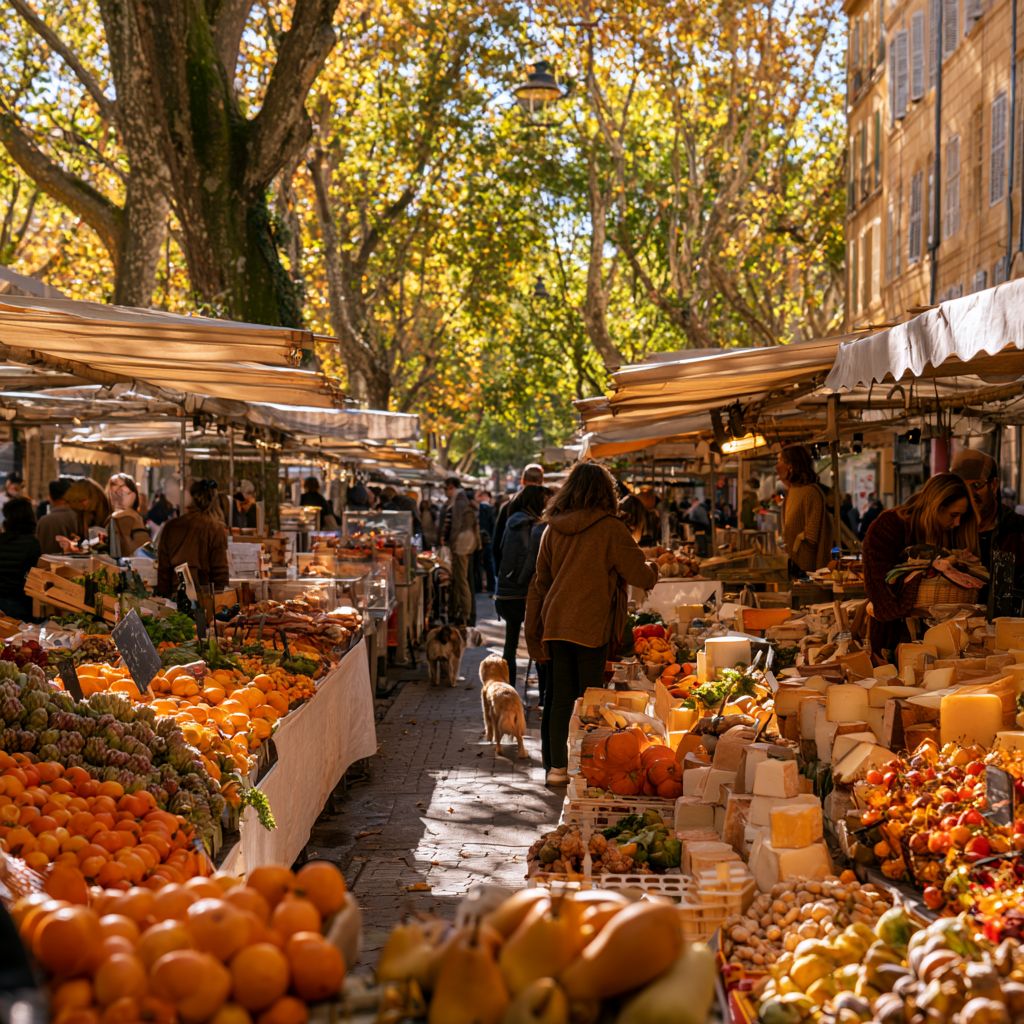
A Provençal market in autumn is an excellent place to abandon a plan. Under striped awnings and the mottled shade of plane trees sit figs almost black with ripeness, russeted pears, ropes of garlic, wild mushrooms, walnuts, olives, jars of amber honey and cheeses in various stages of magnificent disobedience. Tomatoes linger from the last warmth of summer while squash and darker greens announce what is coming next. Herbs arrive in loose, fragrant bundles; baguettes project from baskets; someone tears open a paper bag and the smell of warm bread briefly overtakes everything else.
The colors alone can undo whatever menu you had imagined, because this is the difference between shopping for ingredients and discovering them. A list says you require mushrooms. A market asks whether you have seen these mushrooms. The distinction seems small until you cook from it.
Instead of forcing the market to supply a preconceived dinner, dinner begins responding to what the market has produced particularly well that morning. The figs look extraordinary, so perhaps dessert changes. The goat cheese is perfect, so an elaborate first course suddenly seems unnecessary. Someone cuts a pear and hands you a piece, and the walnuts beside it begin making sense. One ingredient leads naturally to another, and eventually, without much committee work, there is a meal.
That way of shopping requires a little confidence because it replaces certainty with curiosity. It also introduces something increasingly rare into entertaining: surprise for the host. If you already know exactly what you will buy, cook, plate and serve before leaving the house, you are producing an event. If the day is allowed to alter those decisions, you are participating in one.
Where Food Still Has a Face
Markets are often praised for freshness, but freshness is only half their value. They remain social places, full of conversations that would be inefficient anywhere else. Which cheese is better today? Are these pears ready? What would you do with those mushrooms? Is this olive oil from this year’s harvest? The answers may lead to another stall, another taste, another purchase you had not intended to make.
Food becomes attached to people again, and that changes the psychology of the ingredient. A cheese wrapped by someone who has just told you how it was made arrives at your table differently from one lifted anonymously from a supermarket shelf. It has provenance, certainly, but more importantly it has memory.
And memory is useful at a dinner table. The story of the figs, the baker whose bread was still warm, the woman who insisted one particular olive oil was the only one worth having — these small encounters travel home with the food. No one needs to give a lecture about them later; they simply become part of the conversation.
The Necessary Luxury of Doing Nothing
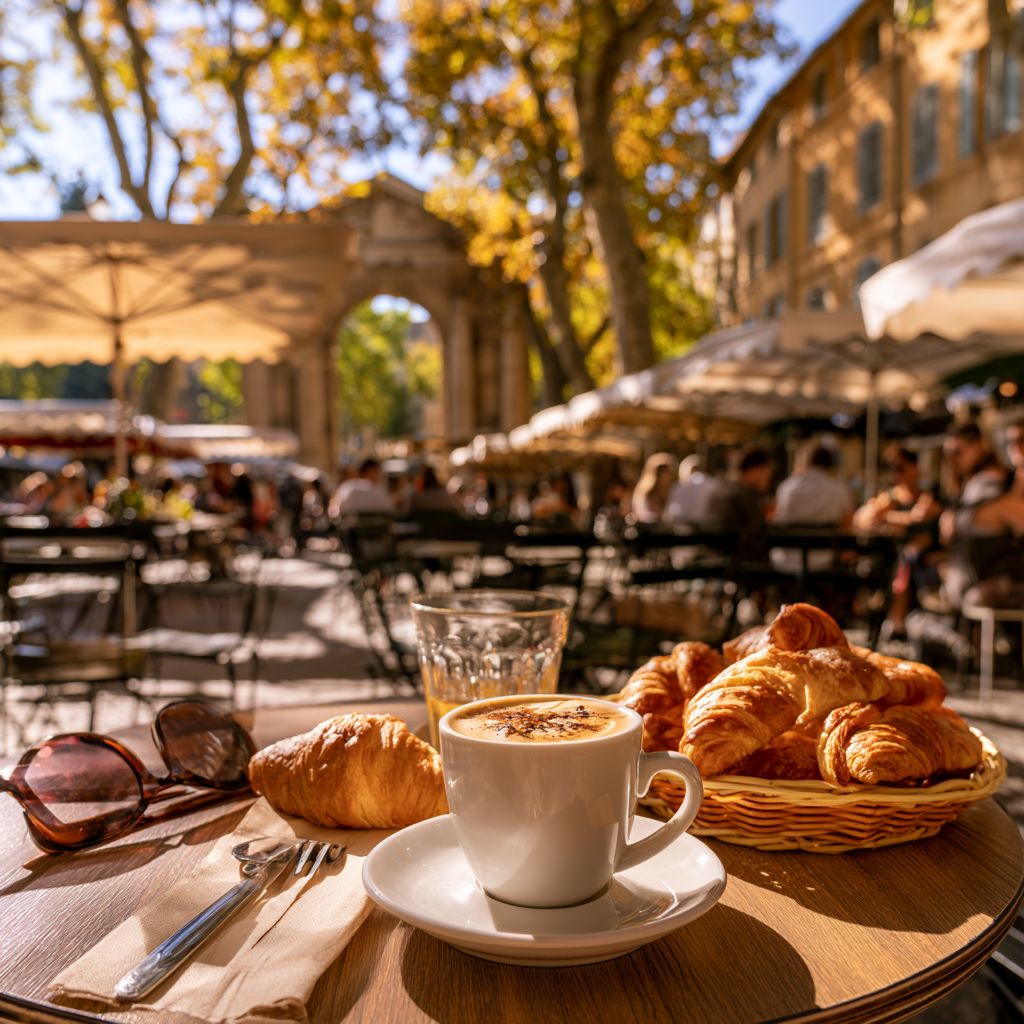
Eventually the basket becomes heavy enough to leave a red mark on your arm. This is an excellent time not to go home.
Find a table in the square instead. Leave the market bags at your feet and order coffee beneath the trees. A croissant may appear with it because Provence has never shown much enthusiasm for punishing a person who is hungry before lunch. Chairs scrape stone, cups meet saucers, waiters thread between tables, and a dog has selected the exact center of the passage for its nap. Above you, leaves stir; across the square, sunlight travels slowly over ochre plaster and pale limestone.
Nothing requires your attention for ten or twenty minutes, and that may be the luxury. The modern host is often encouraged to use every minute before guests arrive productively: chop this, chill that, set this, prepare that. The inevitable result can be an exquisite table presided over by someone whose primary desire is to lie face down in a dark room.
Provence proposes another possibility. Have the coffee. Watch the square. Let twenty minutes accomplish absolutely nothing. The person creating the experience is allowed to have an experience too, and a relaxed host is considerably more attractive company than an immaculate centerpiece.
Carrying the Countryside Home
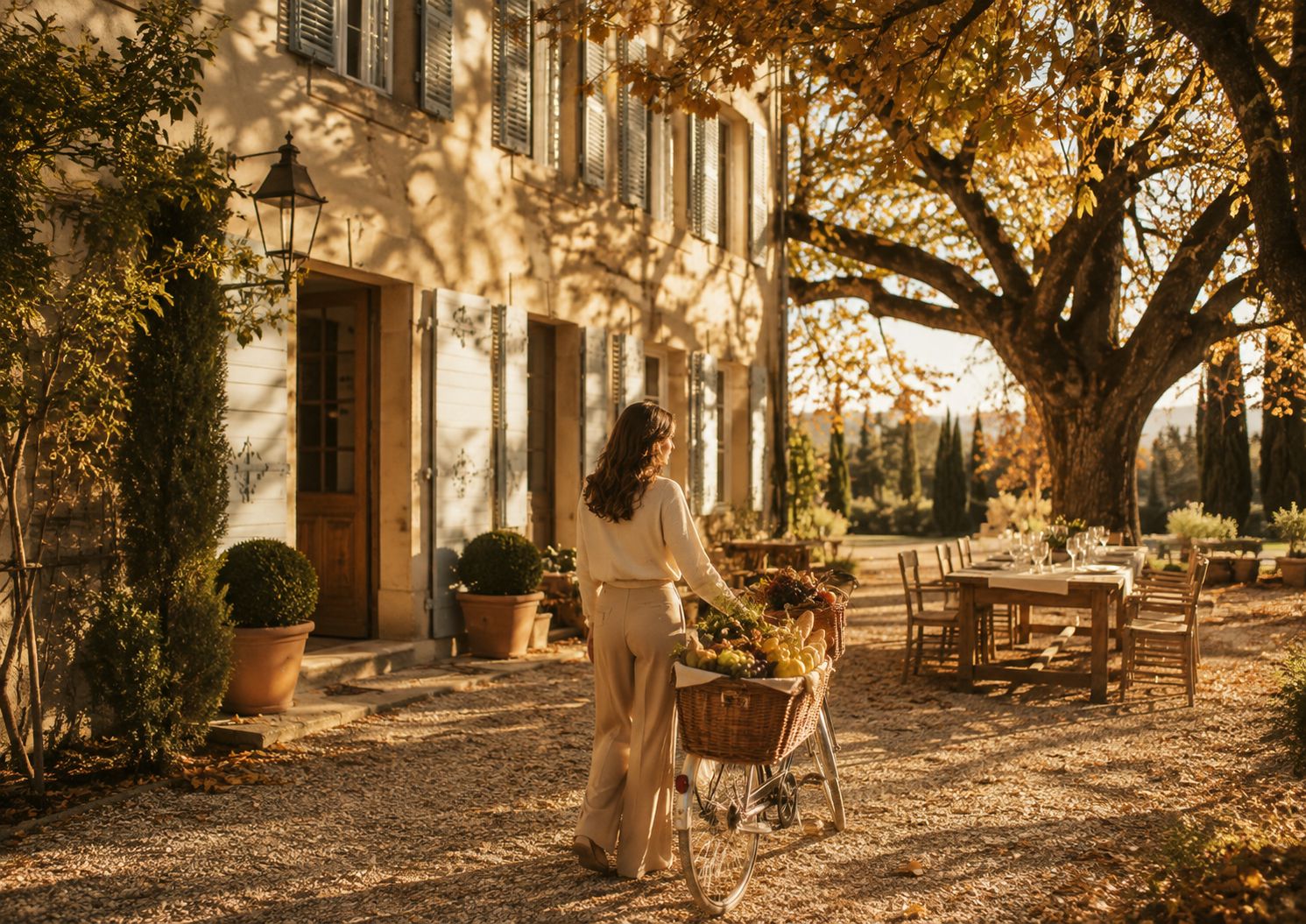
The journey back feels different because the basket now has weight. Bread refuses to fit properly, herb stems escape wherever they can, and fruit rolls gently against fruit as the bicycle turns. The countryside you passed earlier begins to make sense in another way because fragments of it are coming home with you.
Then the mas appears through the trees. Pale stone and faded plaster take the lowering sun; shutters cast long bars of shadow across the façade; the gravel flashes almost white beneath the bicycle wheels. Beside the house, the great tree has begun to bronze at its edges. Beyond it, cypress, olive and distant hills settle into the dusty blue-green that belongs unmistakably to Provence.
There is something particularly satisfying about arriving home carrying dinner. Not a sealed box containing it and not bags of anonymous components, but dinner itself made visible in baguette, greens, figs, cheese, herbs and bottles. The evening is still only potential, and potential is one of entertaining’s loveliest stages.
Do Not Put Everything Away Yet
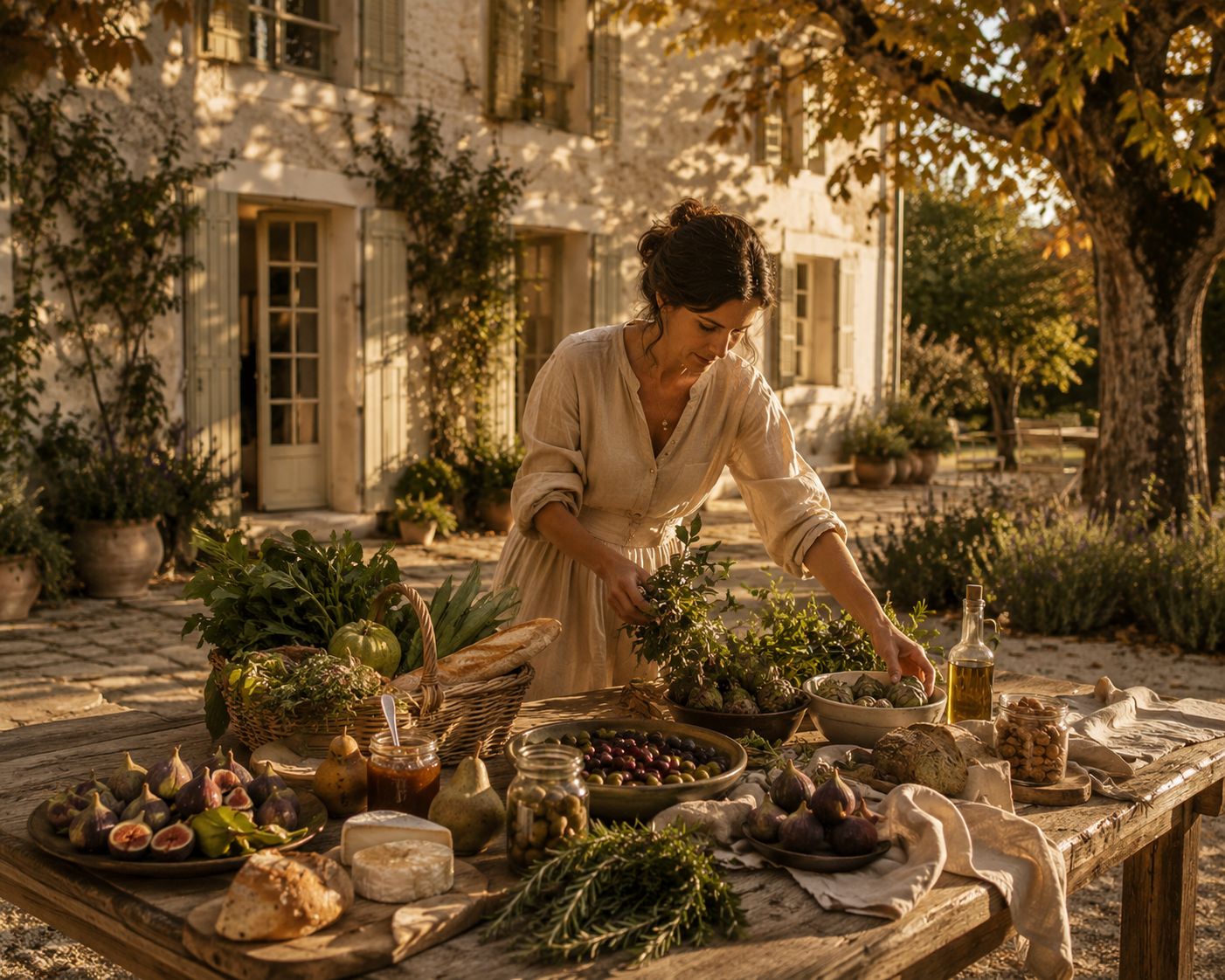
Once home, resist the urge to organize too quickly. Empty the baskets and let the market spread itself across a table. Figs tumble against pears, bread rests across folded paper, mushrooms remain dusty, herbs make everything look wilder than it actually is, and cheese stays wrapped until curiosity wins.
For a few minutes the table becomes a portrait of what the land is producing now. This is where cooking should begin: not necessarily with chopping, but with looking.
Good ingredients frequently reveal how little they require if given enough attention. A perfect fig may not want cooking at all. A very good cheese may make the elaborate appetizer you planned seem faintly ridiculous. Tomatoes that have survived into autumn with all their flavor intact deserve less intervention, not more. Confidence in food often expresses itself through subtraction, because abundance need not mean complication.
The World Inside a Fig
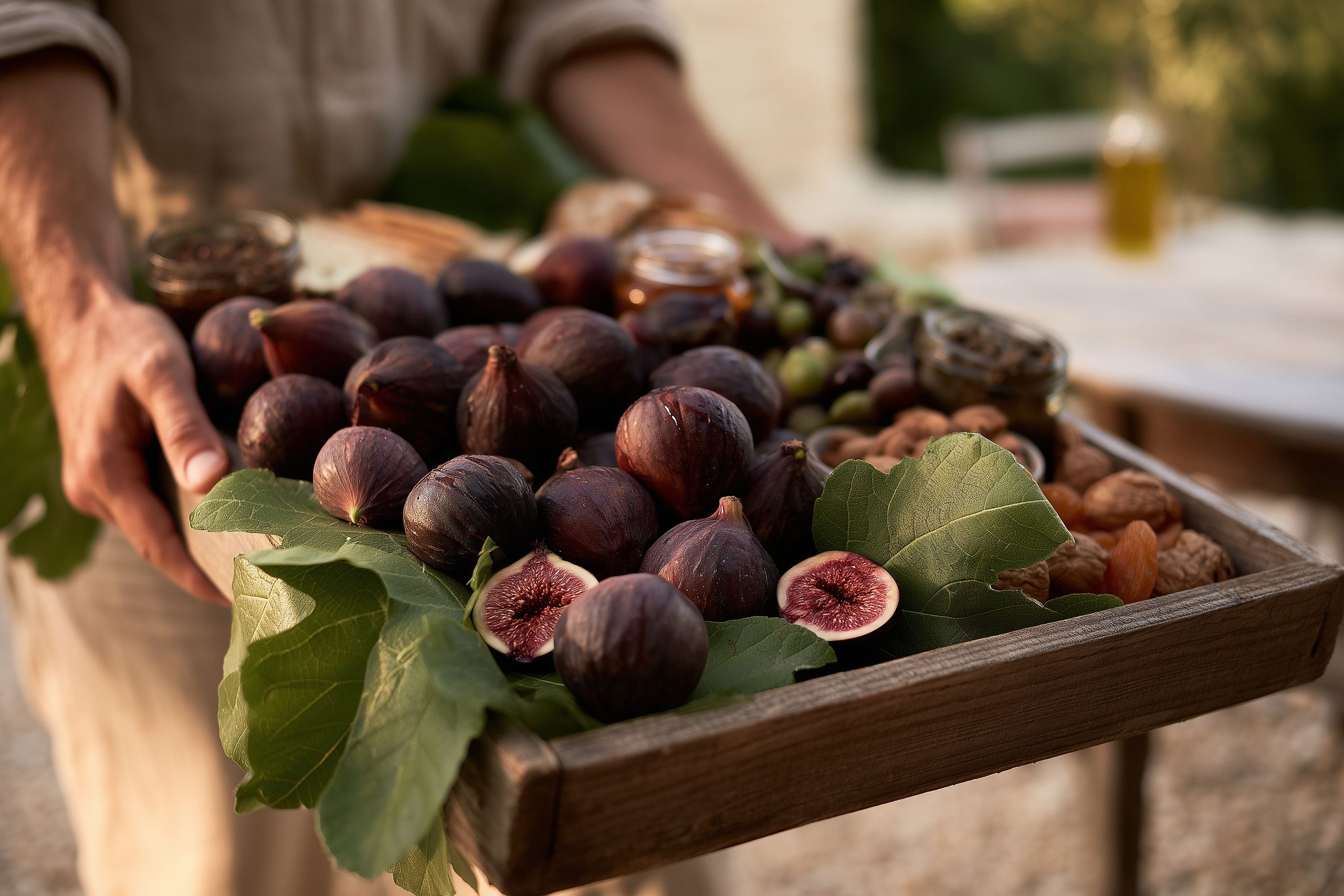
Consider a fig properly and it becomes difficult to understand why anyone ever bothered inventing dessert. Its exterior is almost restrained — purple-black or green, softly powdered, sometimes bruised where the fruit has become impossibly ripe. Then the knife passes through it, and inside is an entire small universe of crimson, rose and cream, seeds packed into a structure so intricate it appears designed rather than grown.
The scent is faint, the texture yielding, and the sweetness carries something greener and earthier beneath it, a reminder that this extraordinary little object came from a tree standing in hot soil. Autumn sharpen sour relationship with foods like this because their availability has begun to feel finite. The last figs matter differently from the first figs. The remaining tomatoes deserve attention because soon they will be gone. Walnuts appear, mushrooms emerge after rain, grapes grow heavier and sweeter even as the leaves around them turn.
The season teaches through subtraction, reminding us that pleasure becomes more vivid when it is not infinitely available.
Generosity Without Excess
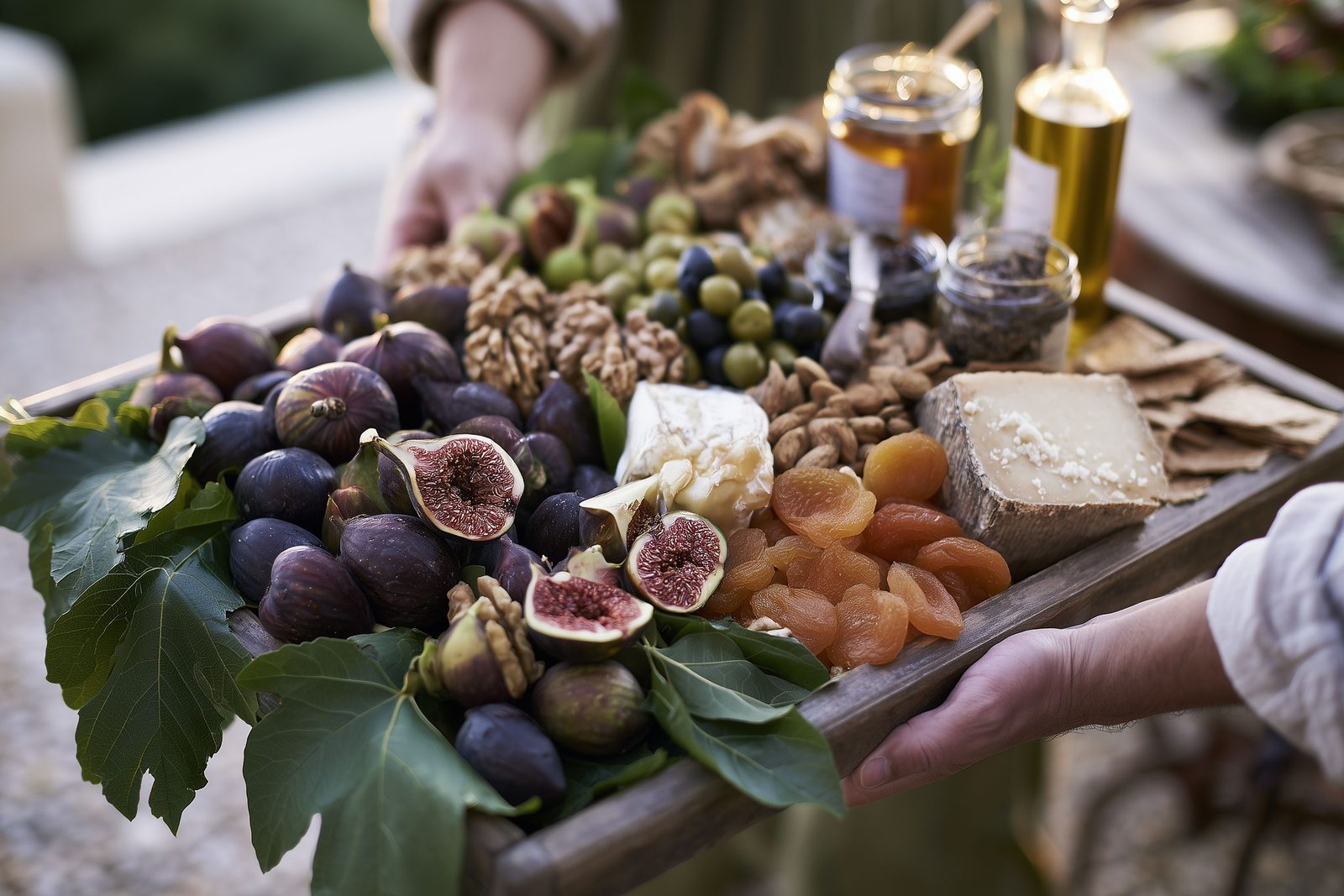
By late afternoon, individual ingredients begin finding their companions: fig and cheese, walnut and honey, olives and bread, a little preserve, good olive oil. Perhaps nothing has been “cooked” yet, and still the table already looks generous.
There is an important difference between generosity and excess. Excess is measured by volume; generosity is measured by care. A host can produce fifteen dishes and somehow leave the table feeling impersonal, while another can put down excellent bread, fruit, cheese and wine and make everyone feel astonishingly well looked after.
Why? Because hospitality is ultimately an act of attention. You noticed what was good, chose it carefully, brought it home, and put it in front of someone you wanted to share it with.
Much of what we now call luxury is really just attention made visible.
Only Now Does the Table Matter
It has taken most of the day for the dining table to enter the story, and that is intentional. The table is notwhere hospitality begins; it is where everything eventually gathers.
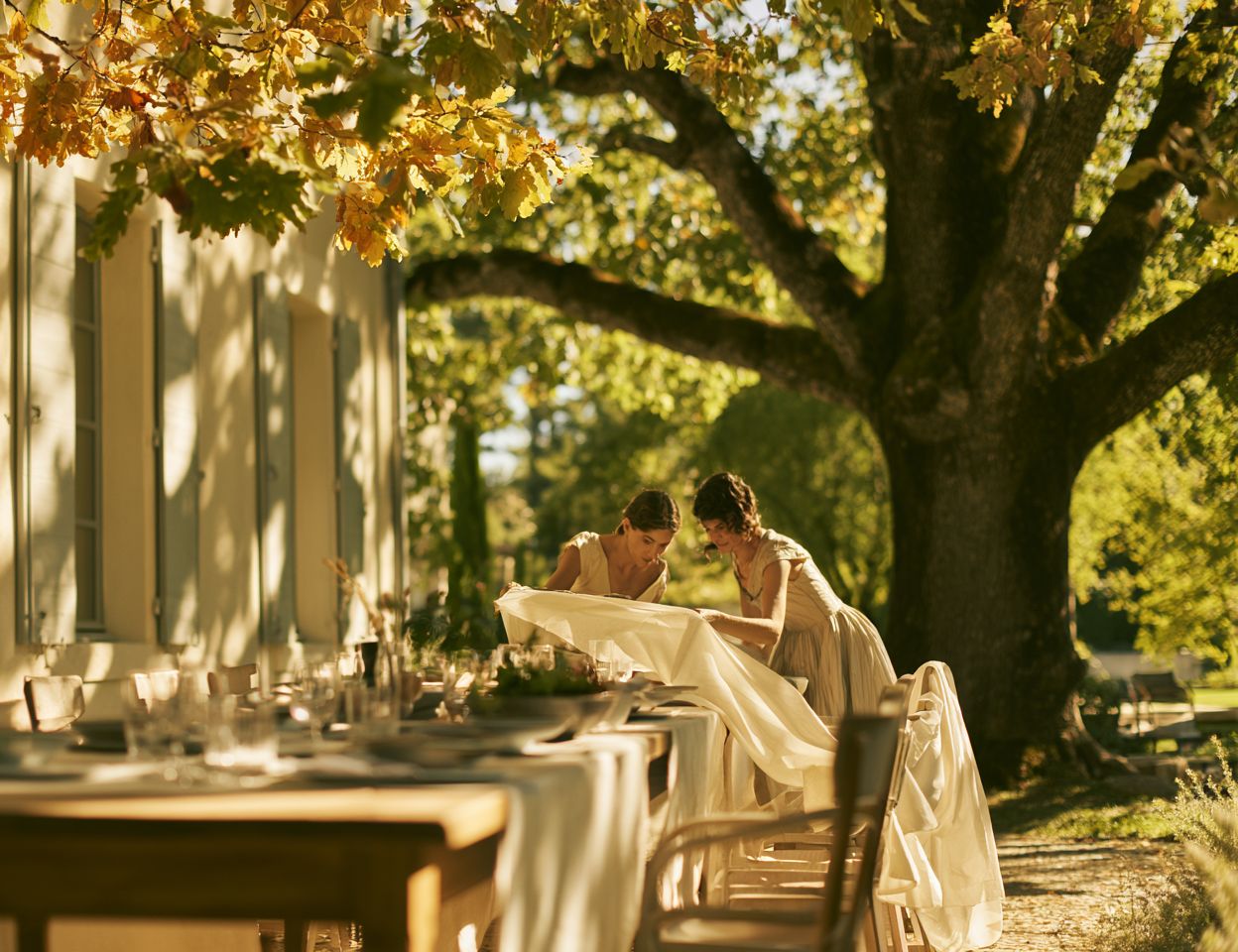
Beneath the broad canopy of an old tree, beside a Provençal mas, nature has already supplied most of the decoration. Leaves filter the low sun into moving patches of gold, gravel makes an informal floor, the pale façade adds warmth, and beyond the garden cypress and olive dissolve gradually into the landscape.
There is no need to fight this setting with excessive styling. Linen can remain slightly rumpled, flowers should appear gathered rather than engineered, glassware needs only to catch the sun, and candles can wait until the light actually requires them. Furniture, too, should understand its role. It needs sufficient character to belong in a beautiful environment without demanding that the environment become its backdrop.
This is where thoughtful outdoor design earns its place. The furniture supports the experience without becoming the experience, and the best outdoor rooms do not announce that they have been designed.
They make you want to stay.
The Hour When the Host Becomes a Guest
At some point, preparation has to stop. There will always be another herb to chop or glass to adjust if one is determined enough, but perfection is no longer useful.
Go inside. Wash the day from your hands. Change out of the clothes that have absorbed bicycle dust, market heat and the kitchen, and put on something that feels like evening. This transition is more important than it sounds because the host who emerges again is no longer producing the gathering; she is about to join it.
Outside, the table waits beneath the tree. Sunlight has moved higher into the branches and lower across the walls, and a lantern has been lit slightly before it is necessary. There are a few minutes when everything is ready enough and no one has yet arrived.
The house seems to hold its breath.
Then the Gravel Crunches
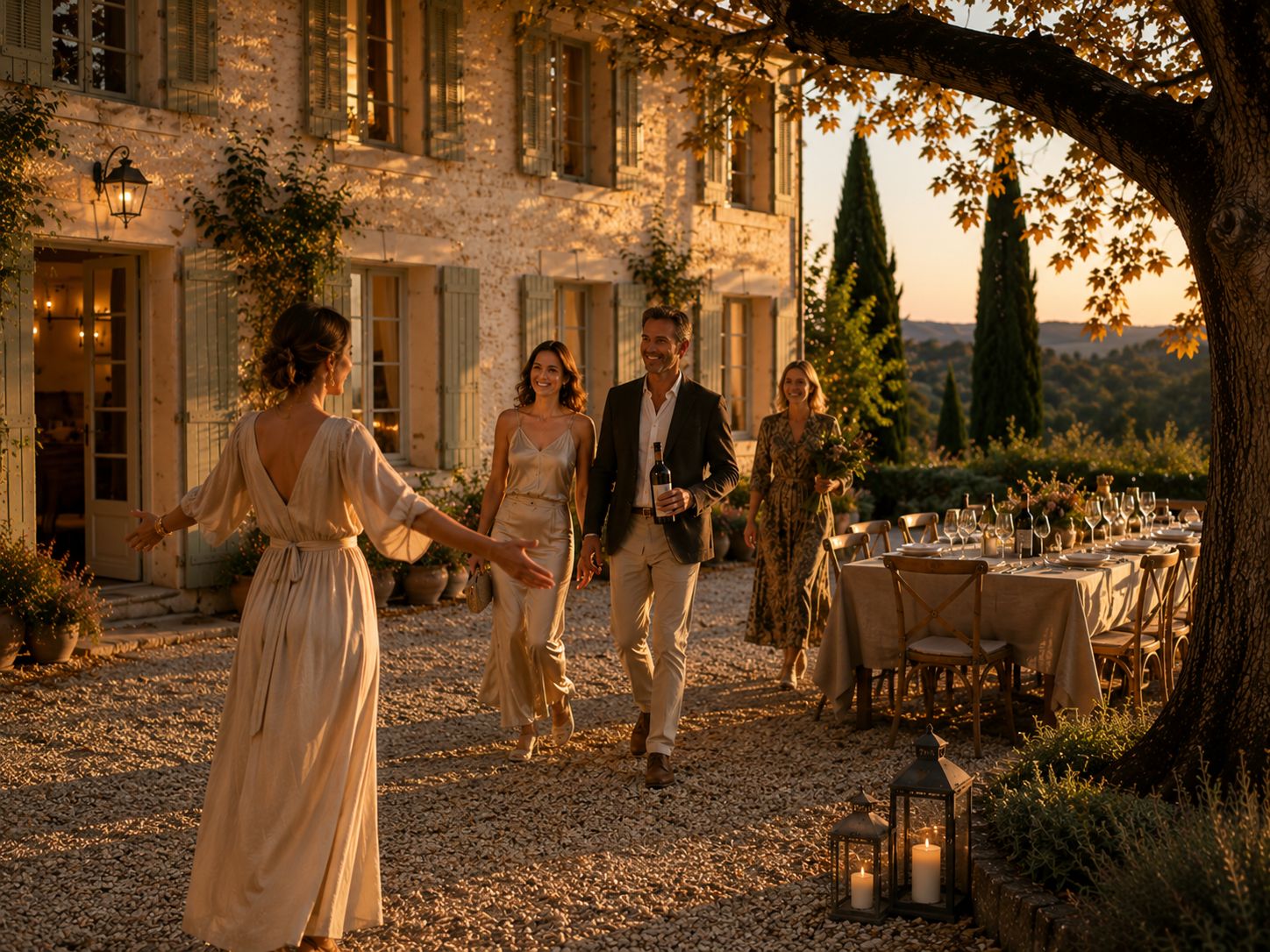
Guests are often heard before they are seen: footsteps on gravel, a car door beyond the courtyard, voices approaching through trees. Someone appears carrying wine, someone else has flowers, and another person arrives carrying nothing whatsoever and the radiant confidence that this will be perfectly acceptable.
It is.
The host walks across the courtyard to meet them, no longer in market clothes but dressed for the evening she has spent the day creating. Behind her, the table sits under the enormous tree and the house has begun to glow.
Something subtle happens in that moment. Until now, the day has belonged privately to the host — the road, the market, the coffee, the basket, the quiet pleasure of arranging what she found. Now it changes ownership. The guests enter an experience that began long before their arrival, and they do not need to know how it was constructed. They only need to feel that they have arrived somewhere worth staying.
That is perhaps hospitality at its most accomplished: effort becoming invisible without becoming absent.
What Provence Can Teach Without Becoming a Fantasy
It is easy to romanticize Provence. Americans have been doing so enthusiastically for generations, with considerable encouragement from Provence itself. But the useful lesson is not that France has discovered the secret to living while everyone else has somehow failed. The lesson is about rhythm.
American life has become extraordinarily adept at convenience. Groceries arrive at the door, dinner can be ordered in seconds, and coffee can be collected without leaving the car. These things solve real problems, and few sensible people would wish them away completely. But convenience sometimes removes the experience surrounding the task. The market becomes an app, the journey becomes delivery tracking, the conversation disappears, the unexpected purchase disappears, and the coffee in the square disappears.
We save time. The more interesting question is what we are saving it for.
The Provençal model suggests occasionally choosing the slower version precisely because the slower version contains something valuable. Visit the farmers’ market rather than having groceries delivered. Walk. Cycle. Taste something you did not intend to buy. Ask the farmer what is best today. Take the long way home. Have the unnecessary coffee. Invite people at seven rather than five so that preparing dinner does not require sacrificing the afternoon.
You do not need a mas in Provence to adopt any of this.
Provence merely makes the lesson very difficult to ignore.
Dinner as the Consequence of a Good Day
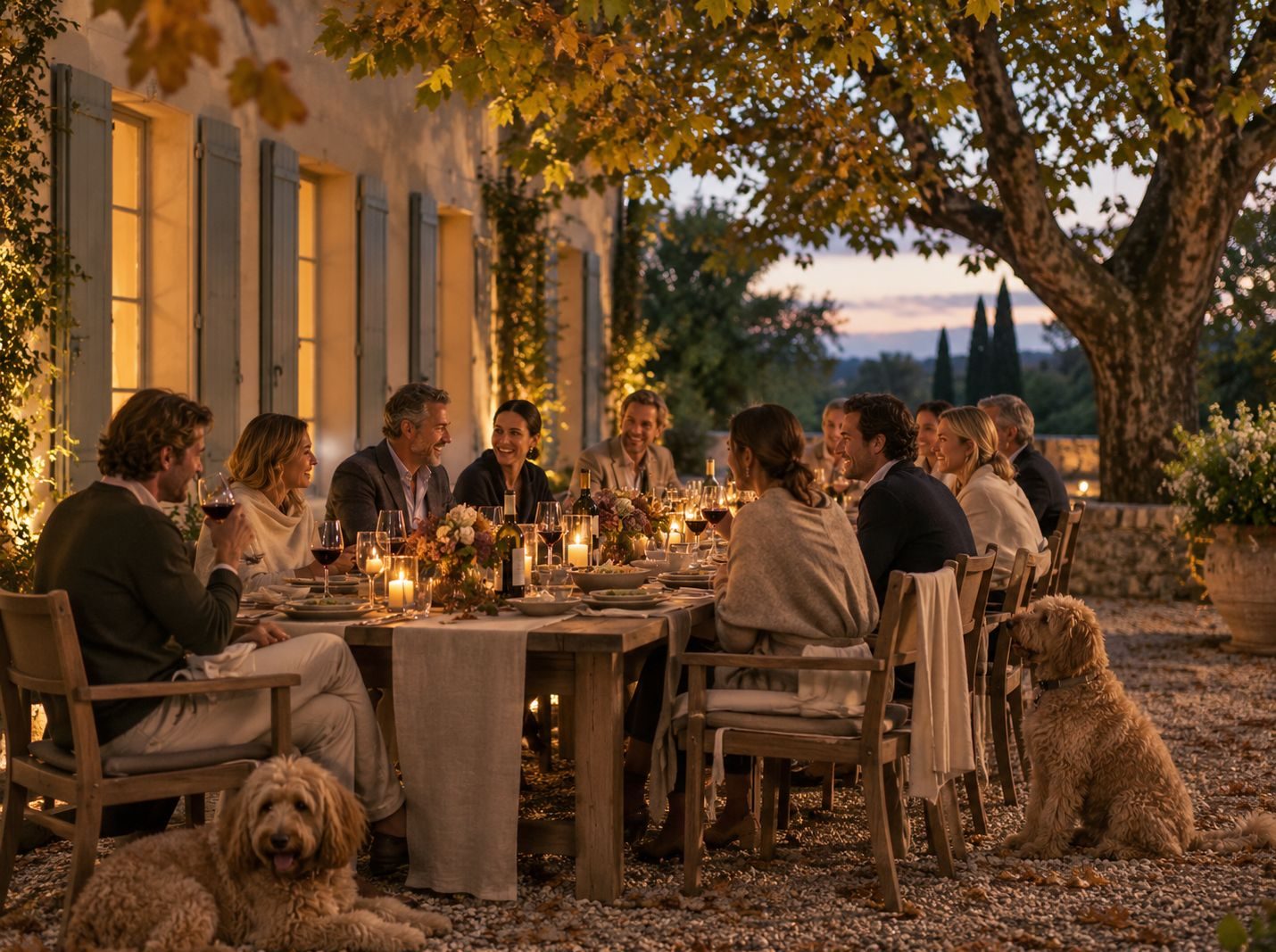
By the time everyone sits down, dinner feels less like an event beginning than the day finally finding its proper place. Wine catches the last gold in the glasses. Bread is broken. A fig bought that morning reappears beside cheese. Plates drift from their careful original positions, someone reaches across someone else, a dog settles beneath the table, and one story interrupts another before the first has quite finished.
The table begins acquiring the slight disorder that distinguishes a real dinner from a photograph of one. And the host is sitting.
That may be the most important image of all, because too many beautiful dinners are experienced fully by everyone except the person responsible for them. Here, there is nowhere else to be. The market is closed, the bicycle rests against the house, the baskets have been emptied, and whatever remains in the kitchen can wait.
The day has surrendered itself to evening. Because dinner was allowed to begin so much earlier, the meal now feels connected to everything that preceded it. The food carries the market, the wine carries the landscape, and the table carries the afternoon light.
Dinner has become not a performance, but a consequence.
When Detail Gives Way to Memory
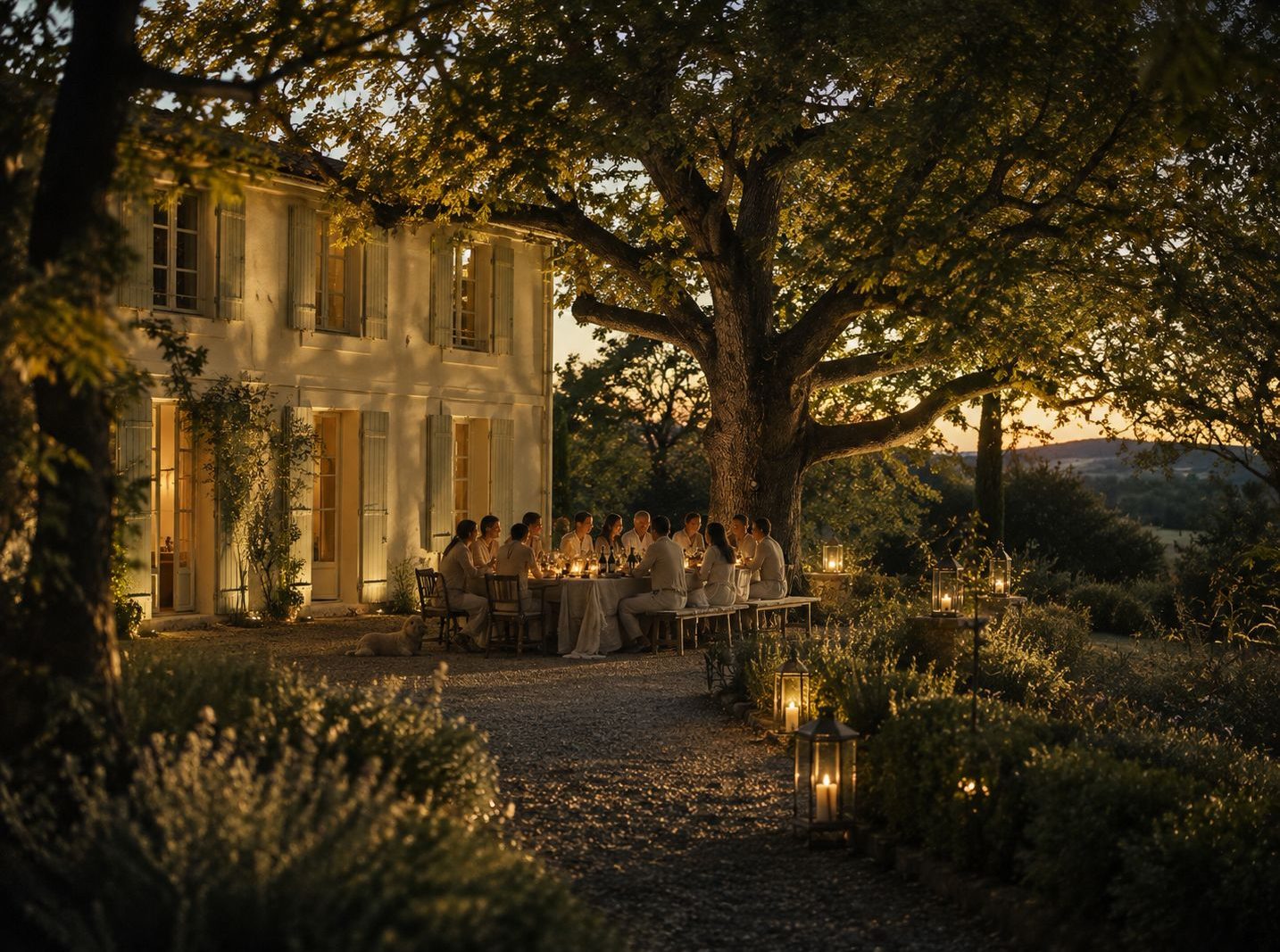
Walk away from the table, just far enough that individual voices dissolve into the warm, indistinct sound of people together. The food disappears first, then the flowers, then faces. The long table becomes a pale ribbon beneath the enormous tree. Lanterns punctuate the gravel. Light spills from the open doors and windows of the mas, while beyond the garden the hills of Provence fold quietly back into blue-black shadow.
From here, none of the day’s careful details can be seen. Not the figs, not the cheese, not the bottle chosen after cycling past vines whose leaves had turned almost red. And yet this distant view may contain the whole experience more completely than any close-up.
A house. A tree. People gathered beneath it. Autumn settling over the land.
We call it dinner because dinner gives the day a convenient name, but the things we carry away from such evenings are rarely listed on the menu. We remember the cool air beneath the trees on the ride to market, the smell of bread, the weight of a basket, sunlight warming the stone wall of the house, a cup of coffee we did not need, someone arriving with flowers, the first candle becoming visible as daylight finally weakened, and the sound of laughter travelling across a garden after dark.
Food gave us the reason to gather. The day gave the gathering meaning.
And perhaps that is the particular seduction of Provence: a meal may occupy two hours, while the pleasure of creating it can occupy an entire day. Why would we hurry through either?
UNTIL NEXT TIME…
Design is more than aesthetics — it’s a seamless continuum that connects the way we live, work, and gather. Explore new perspectives, timeless craftsmanship, and inspired living with us!
Stay connected to the Seasonal Living Design Continuum Journal. Subscribe today to receive our latest journal entries!